Helmets.

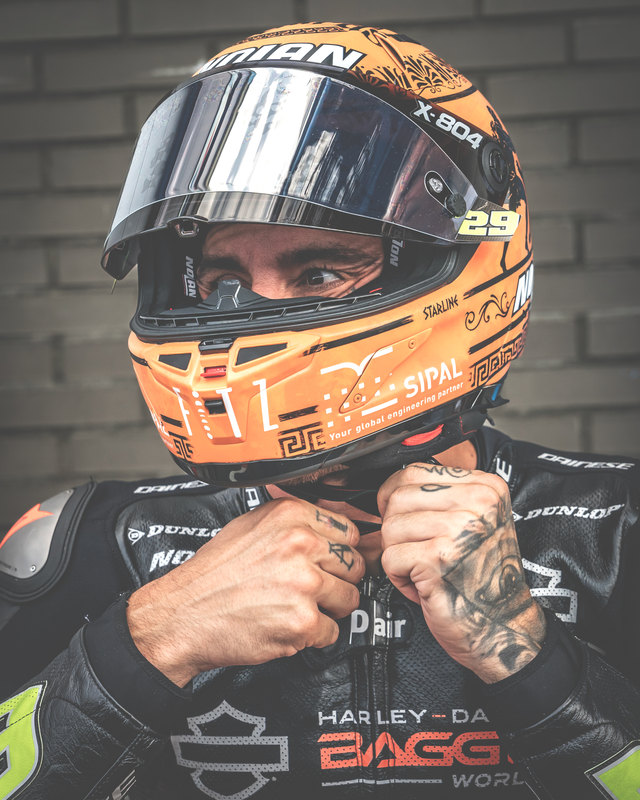
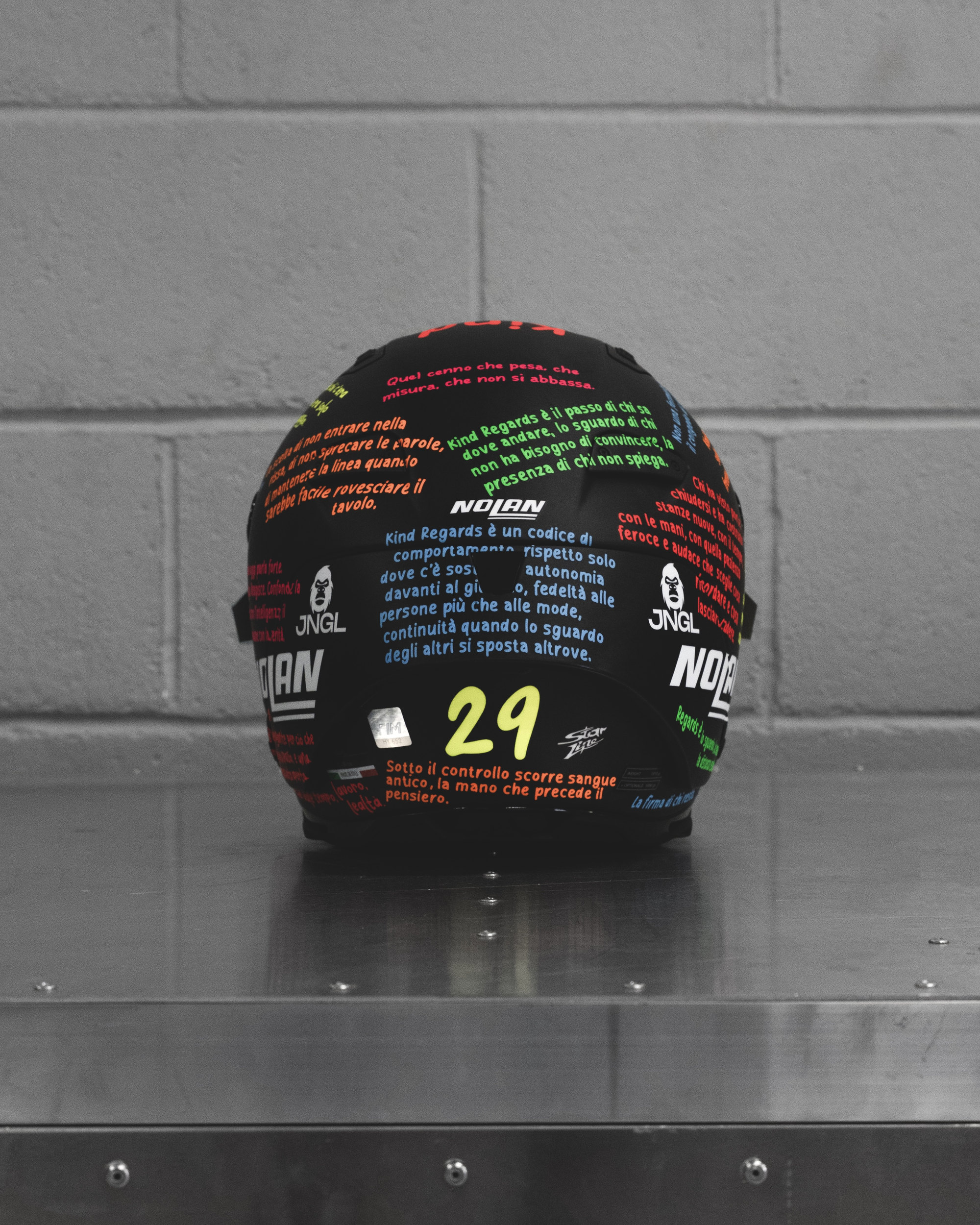
Five chapters for the 2026 Bagger season, developed by Andrea Iannone with creative director Walter Giordano. A signature and a symbol run through the series. The visual language changes with each circuit.

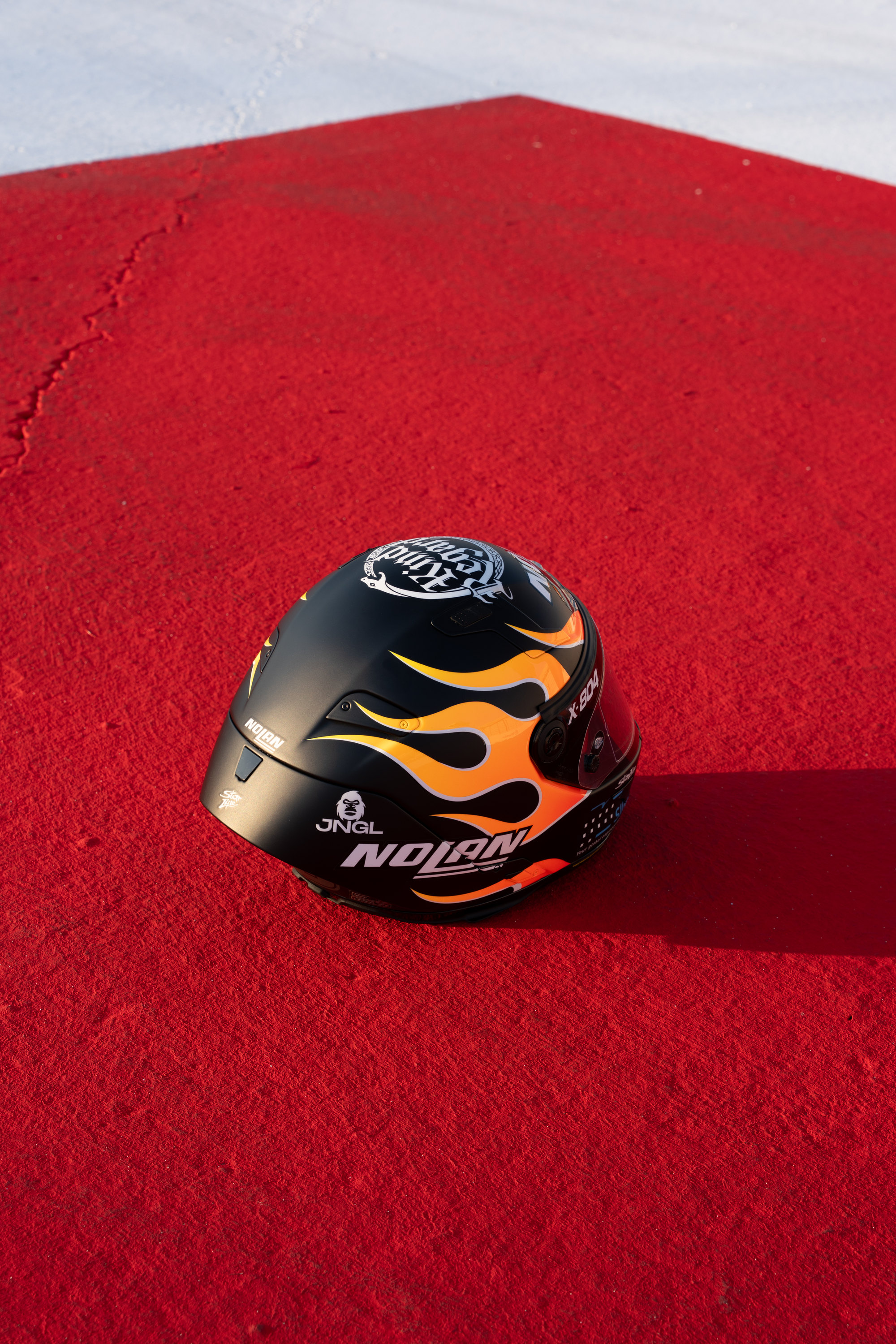
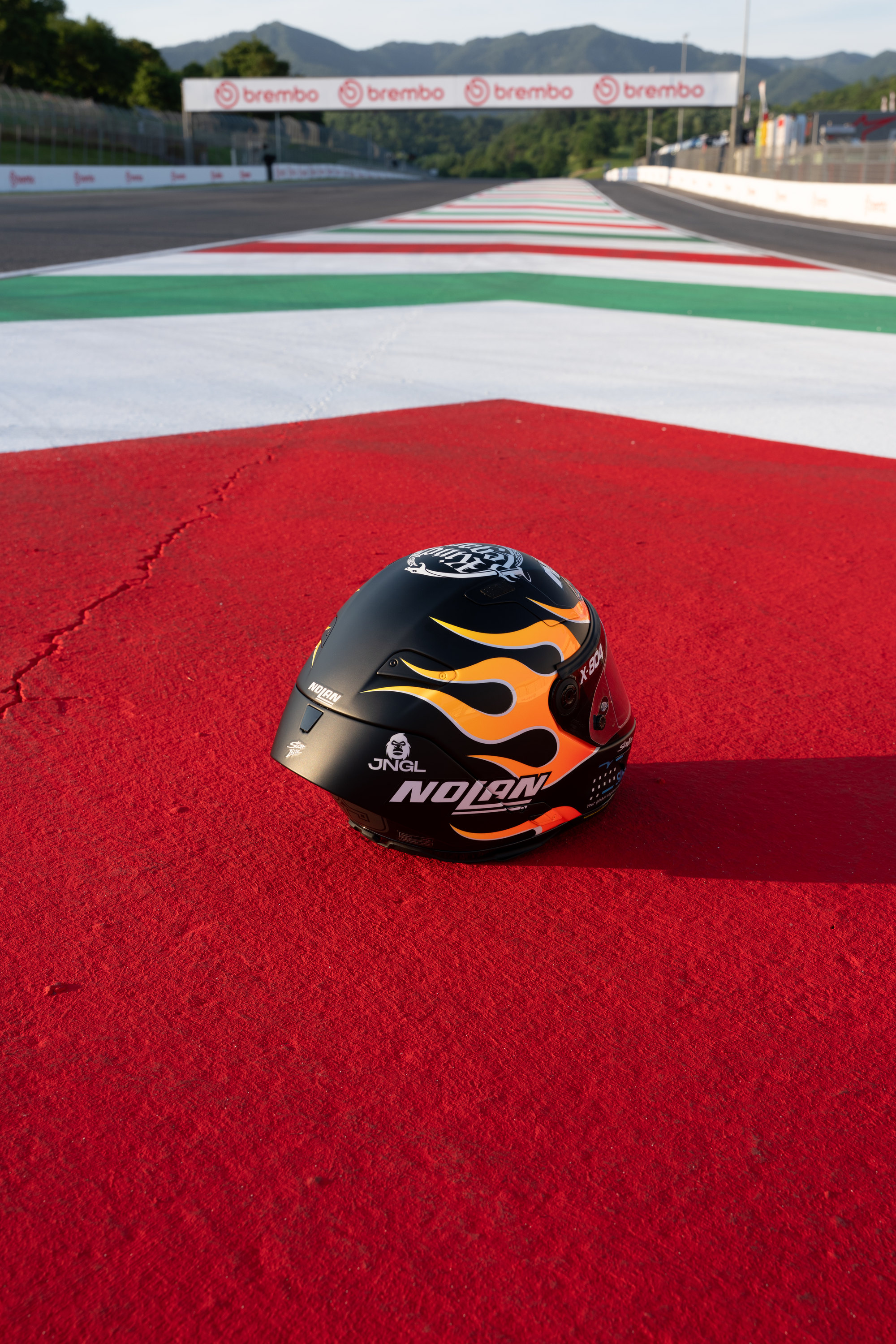
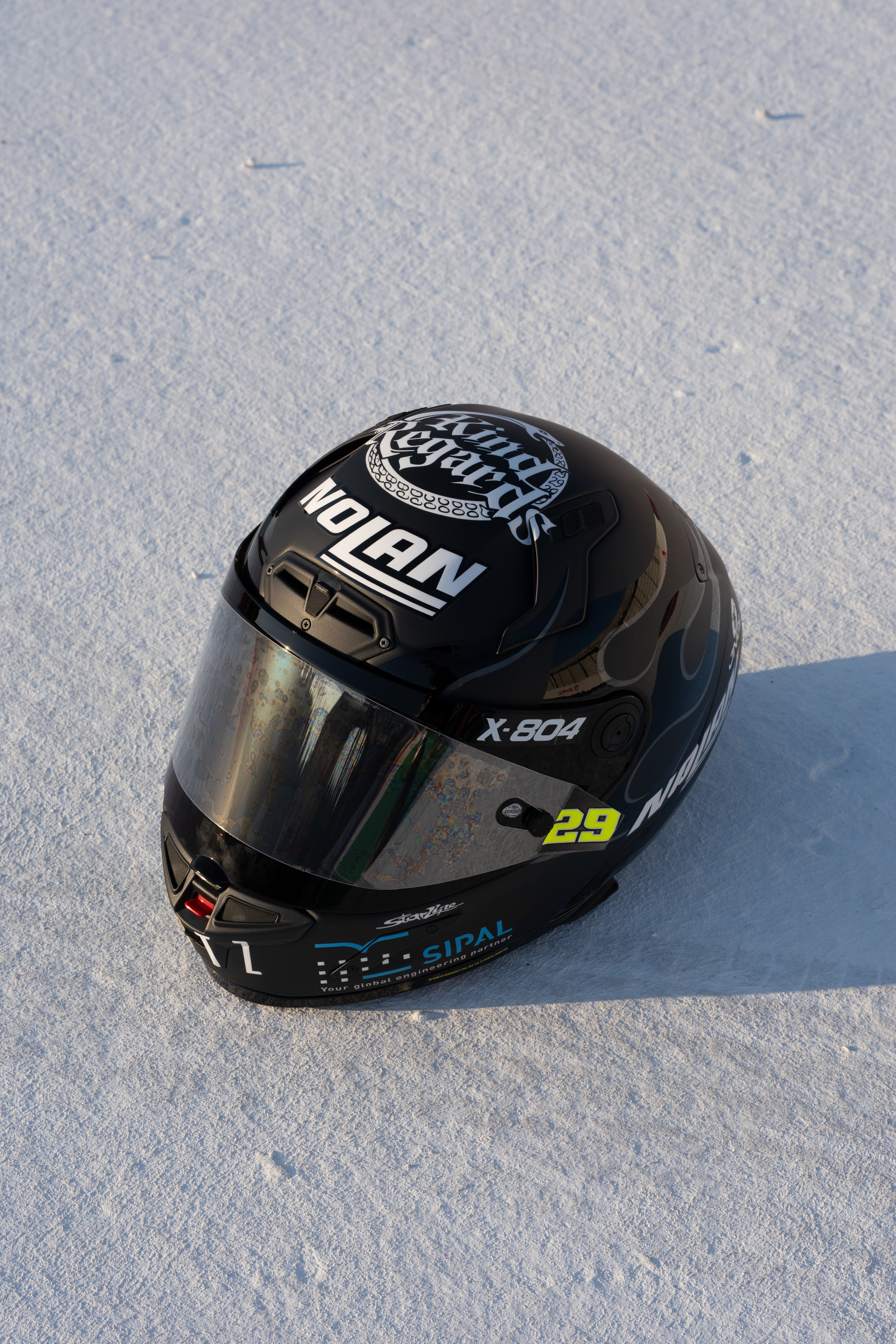
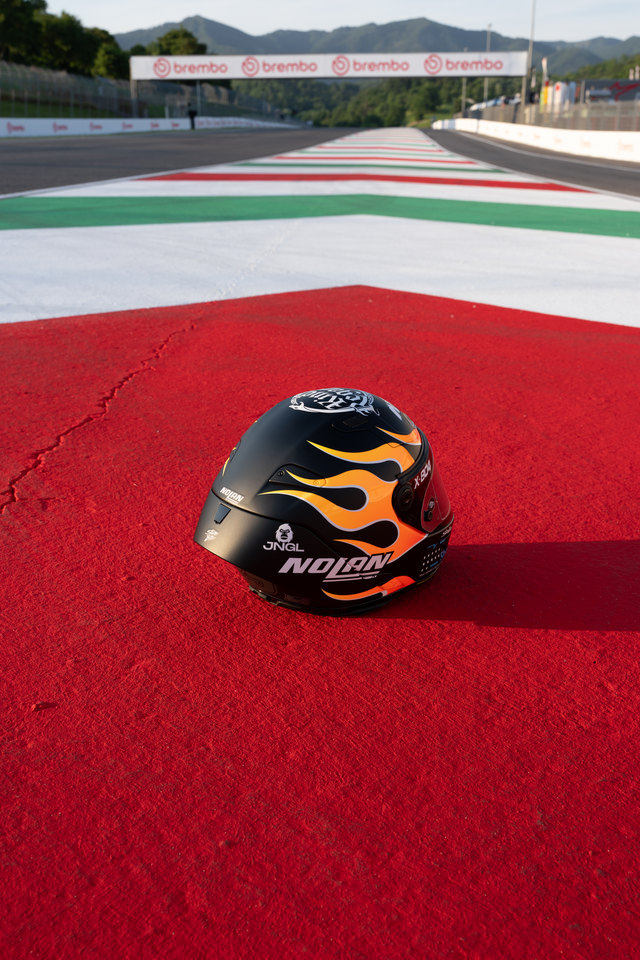
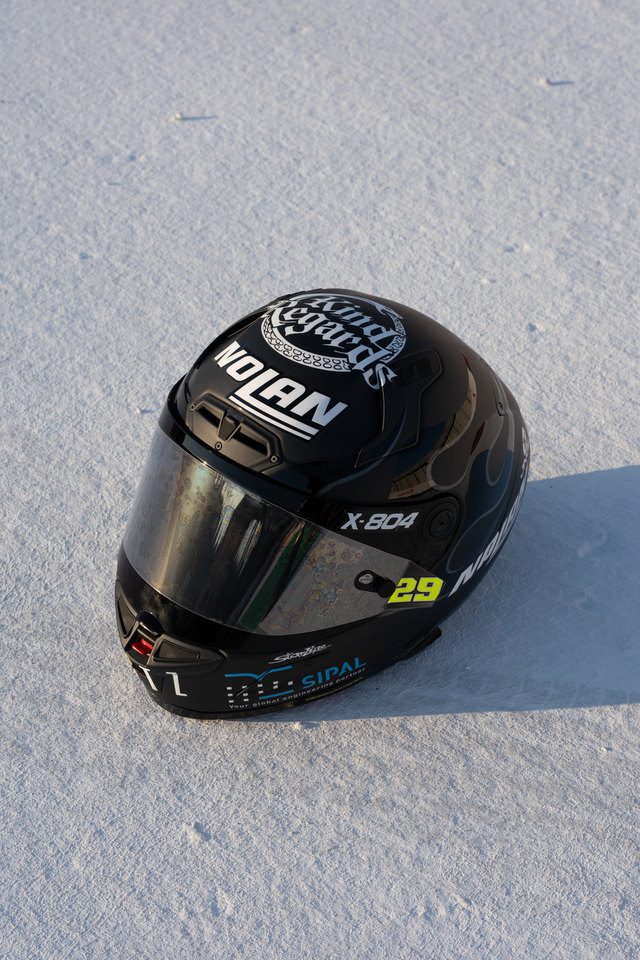
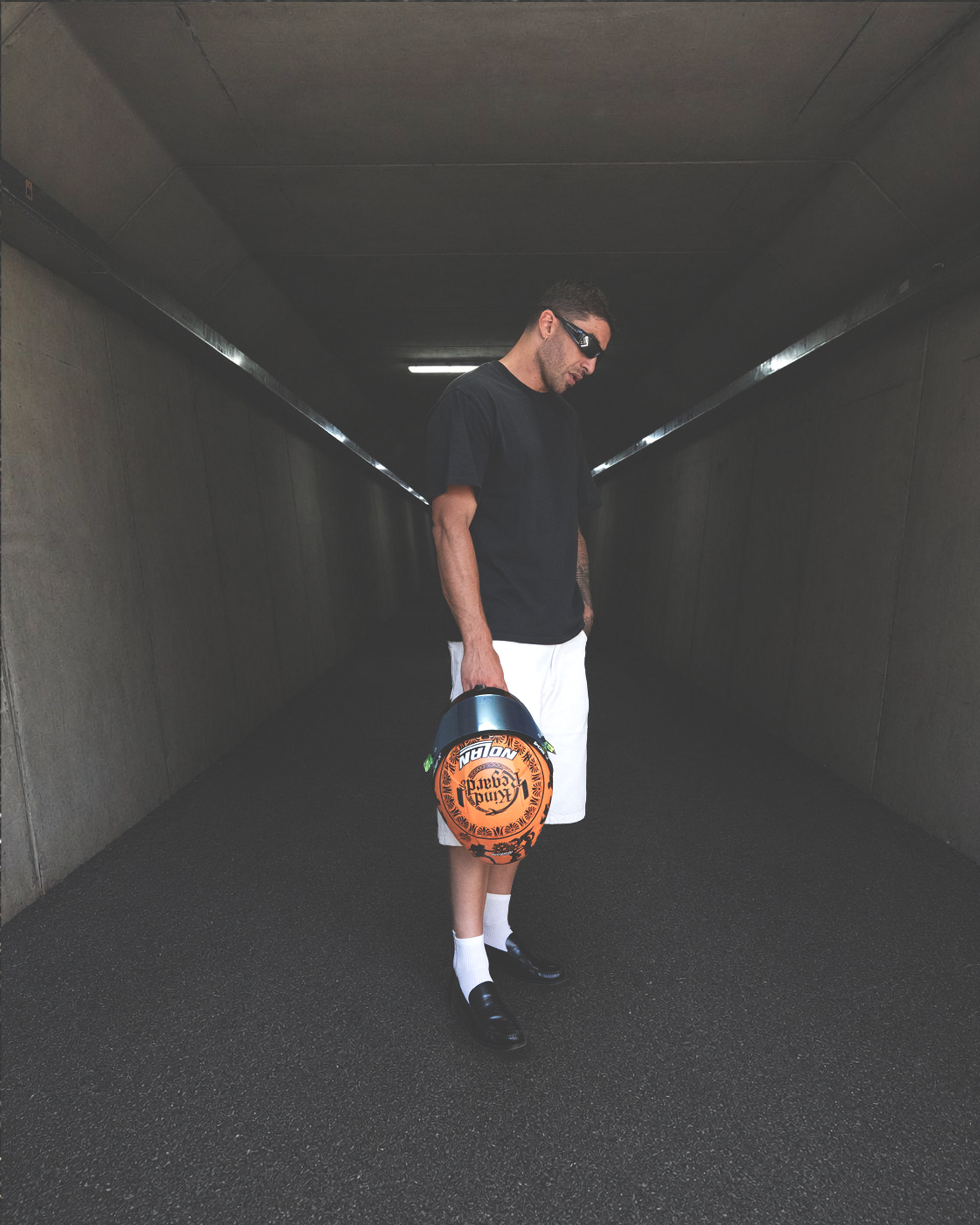
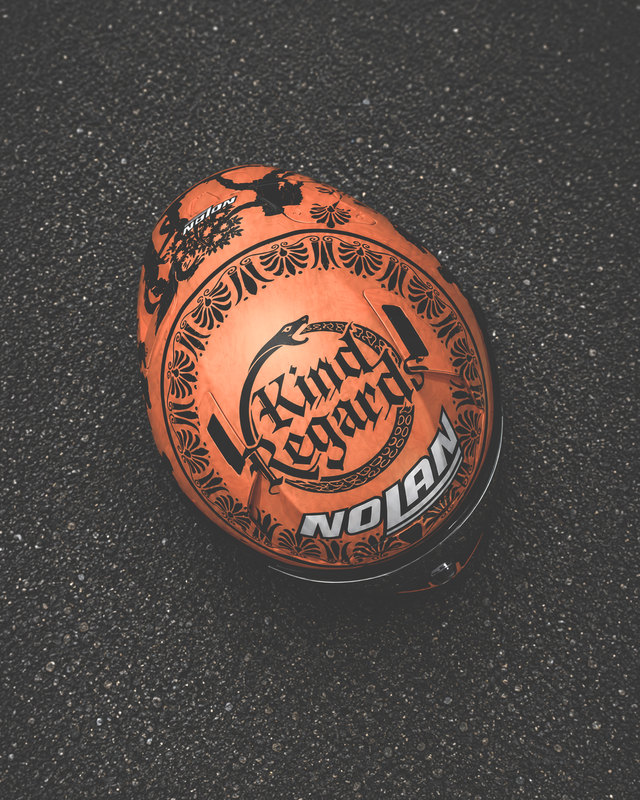
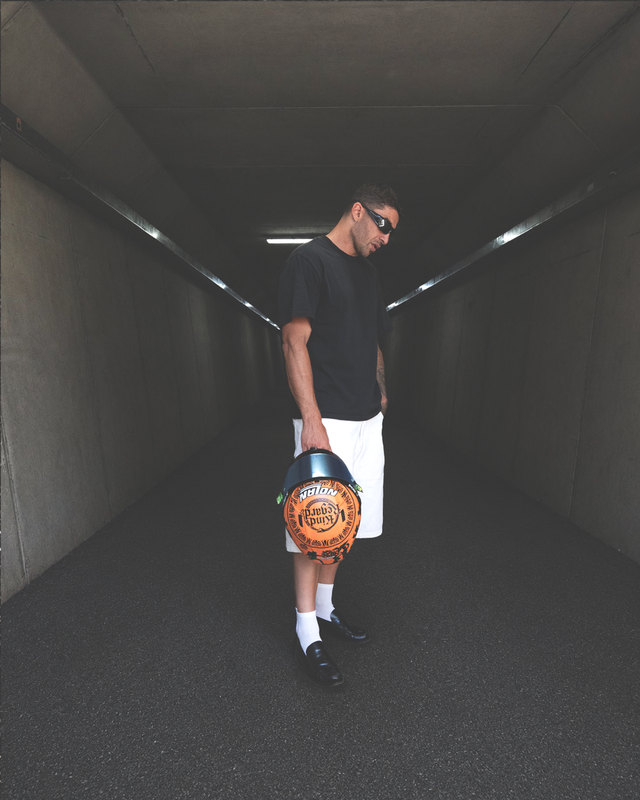
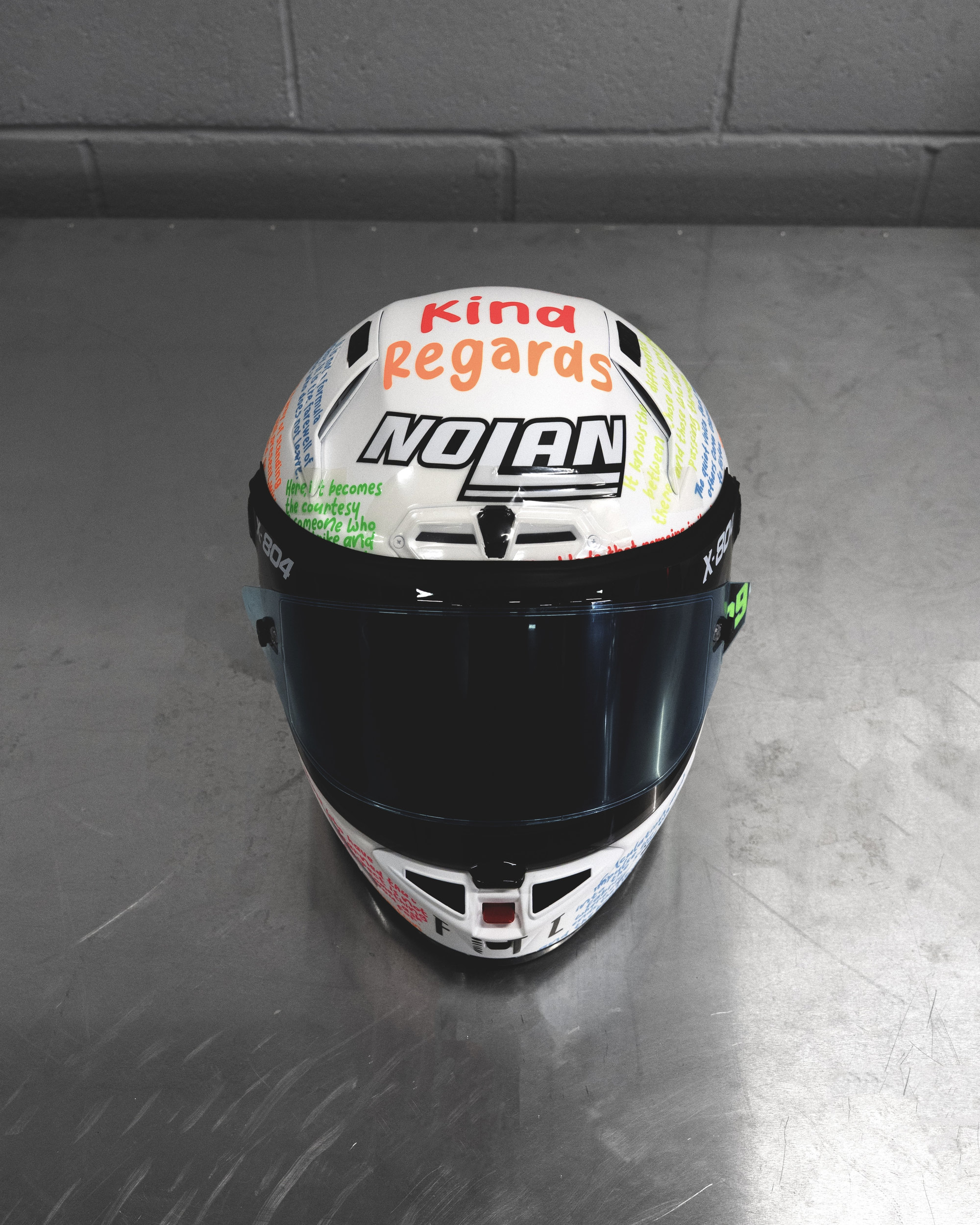
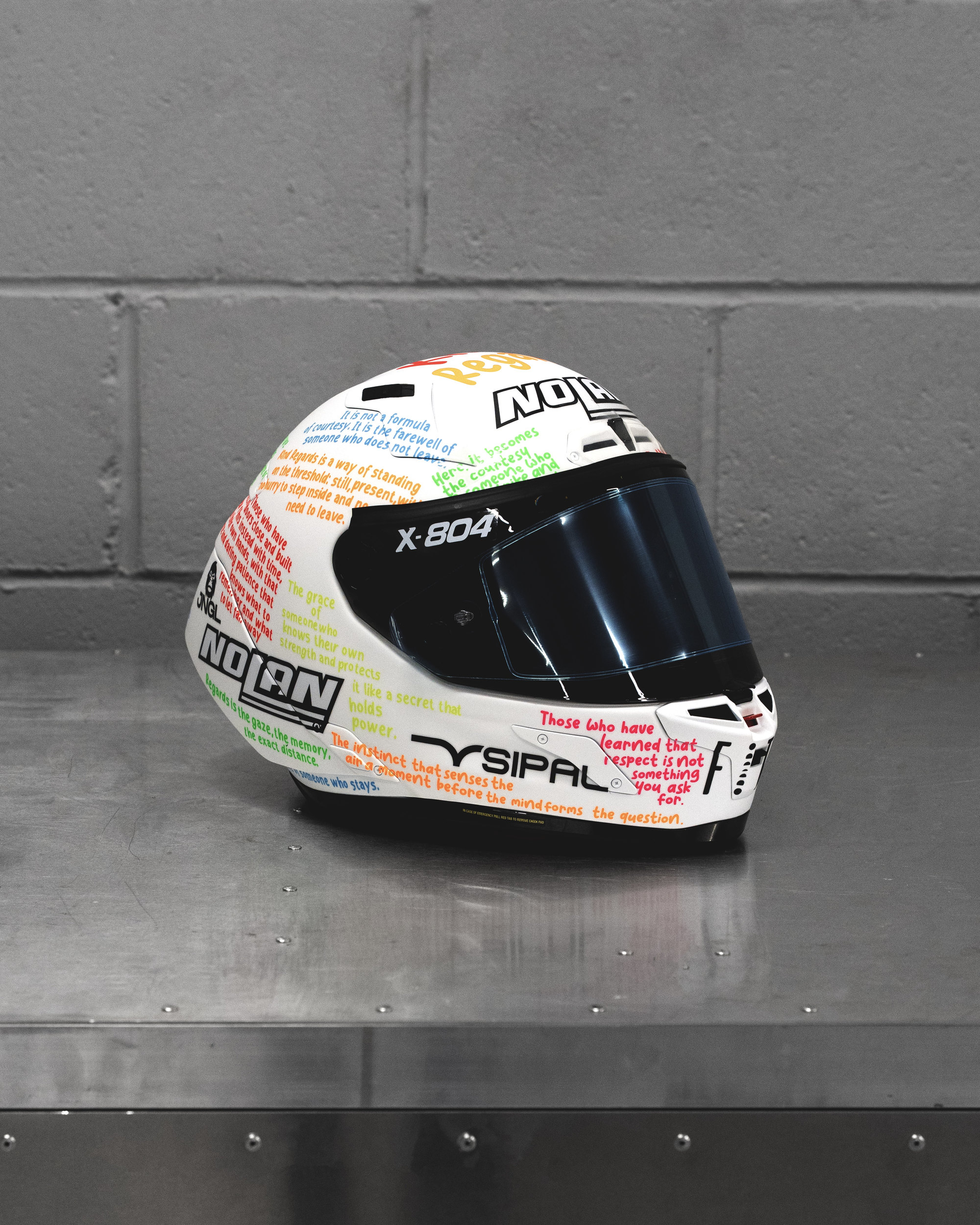
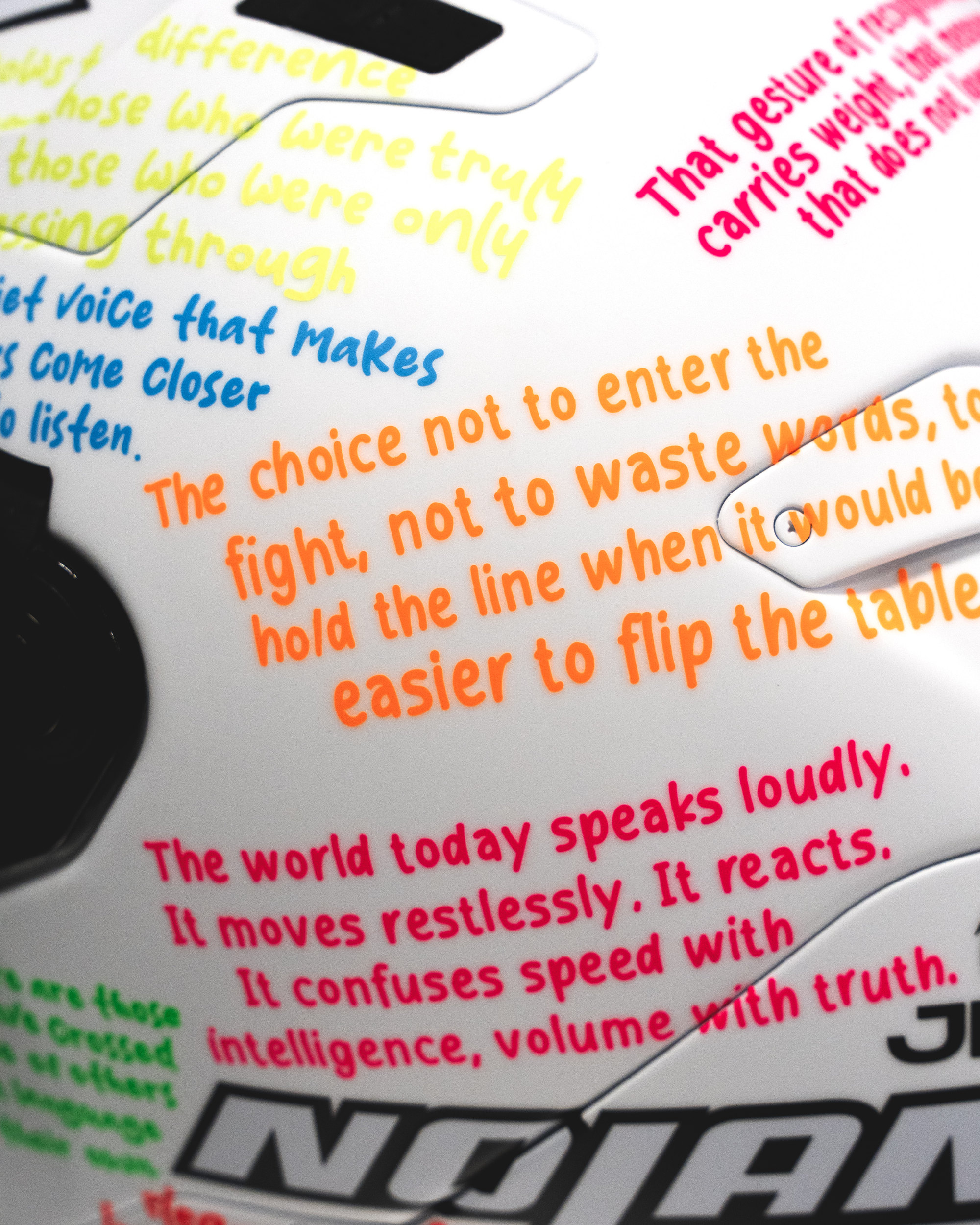
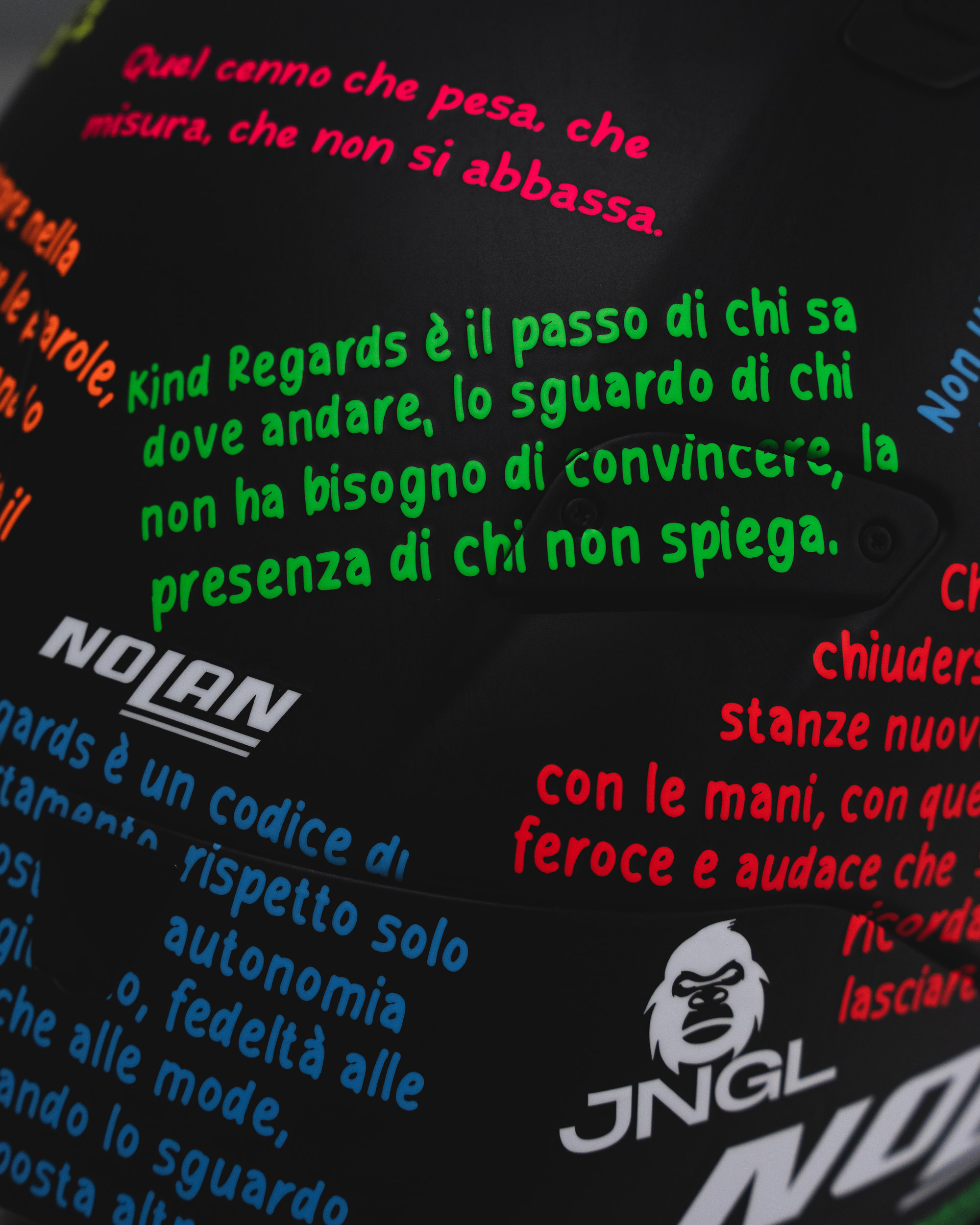
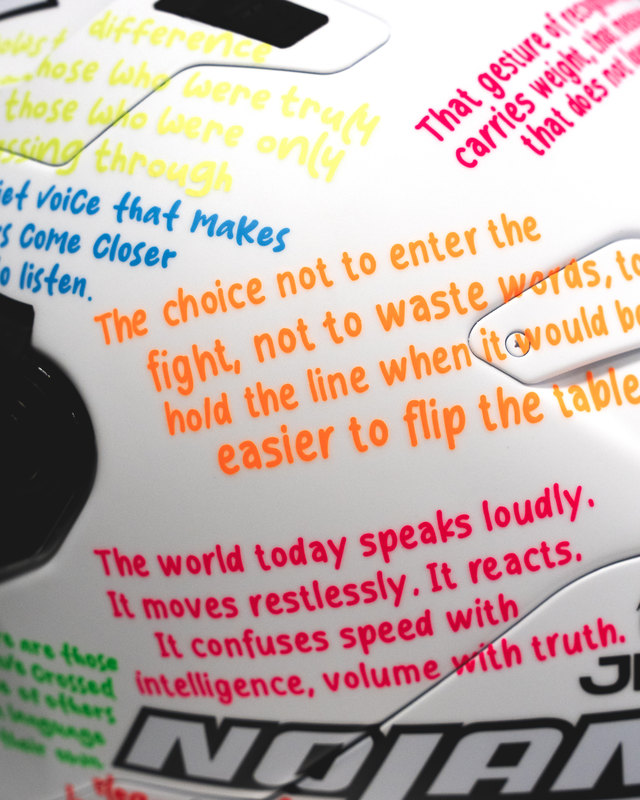
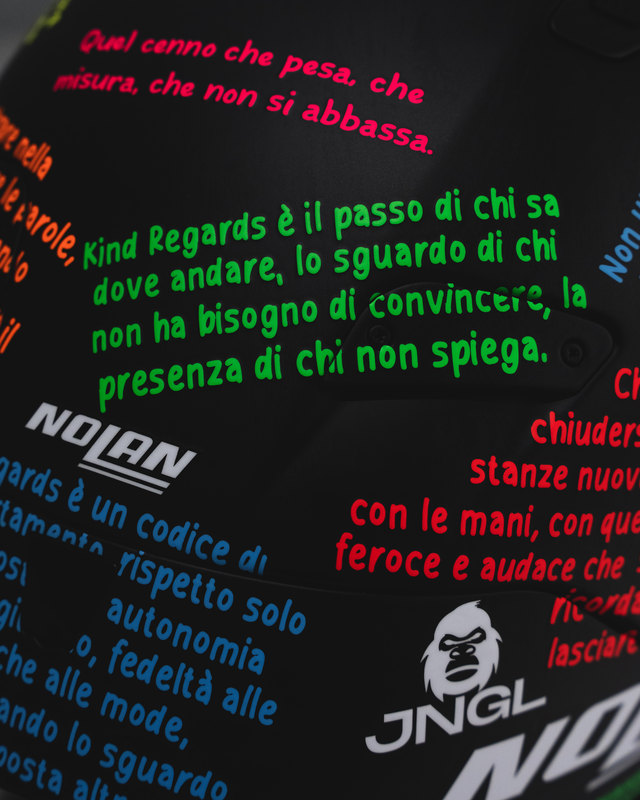
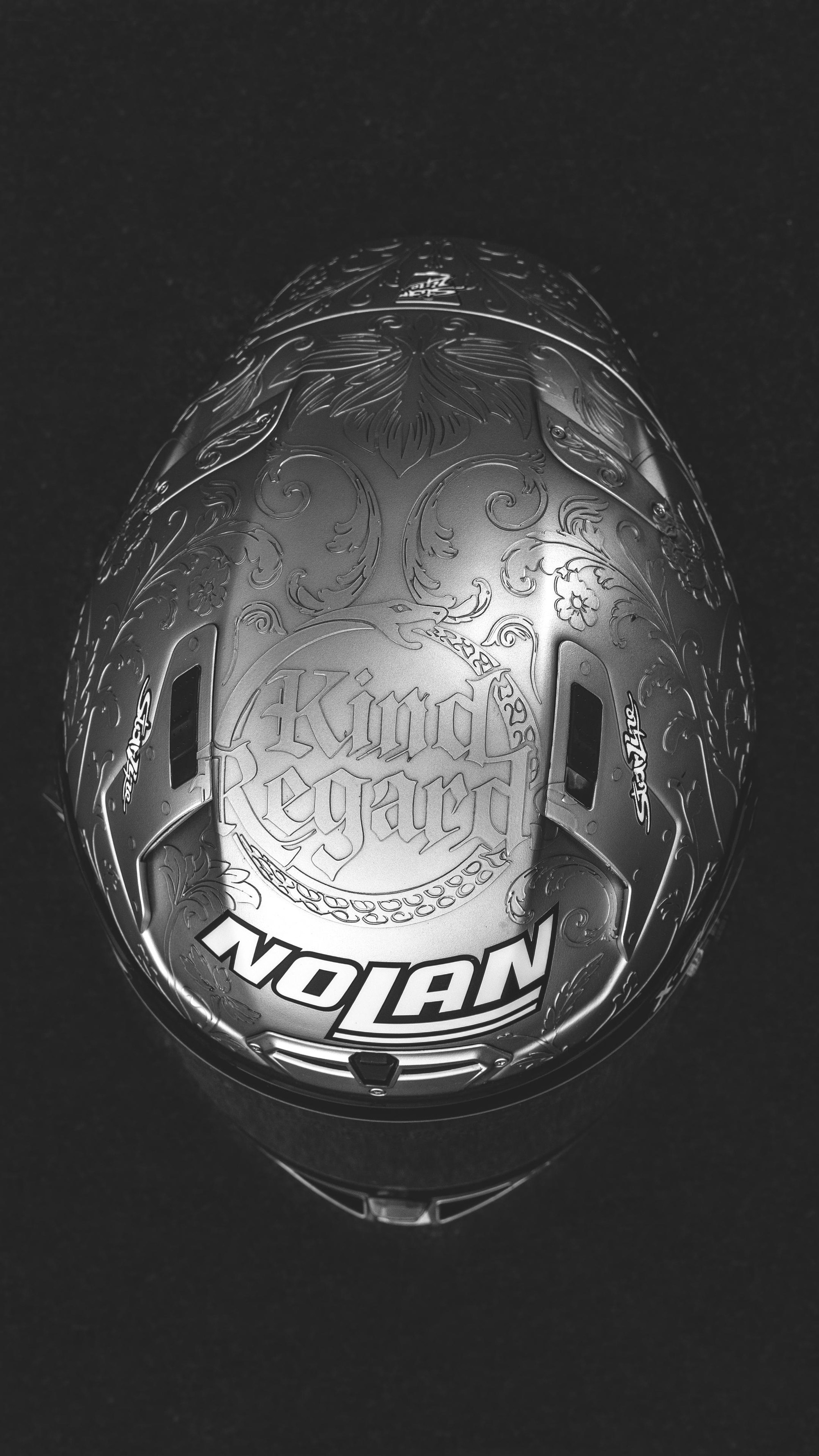
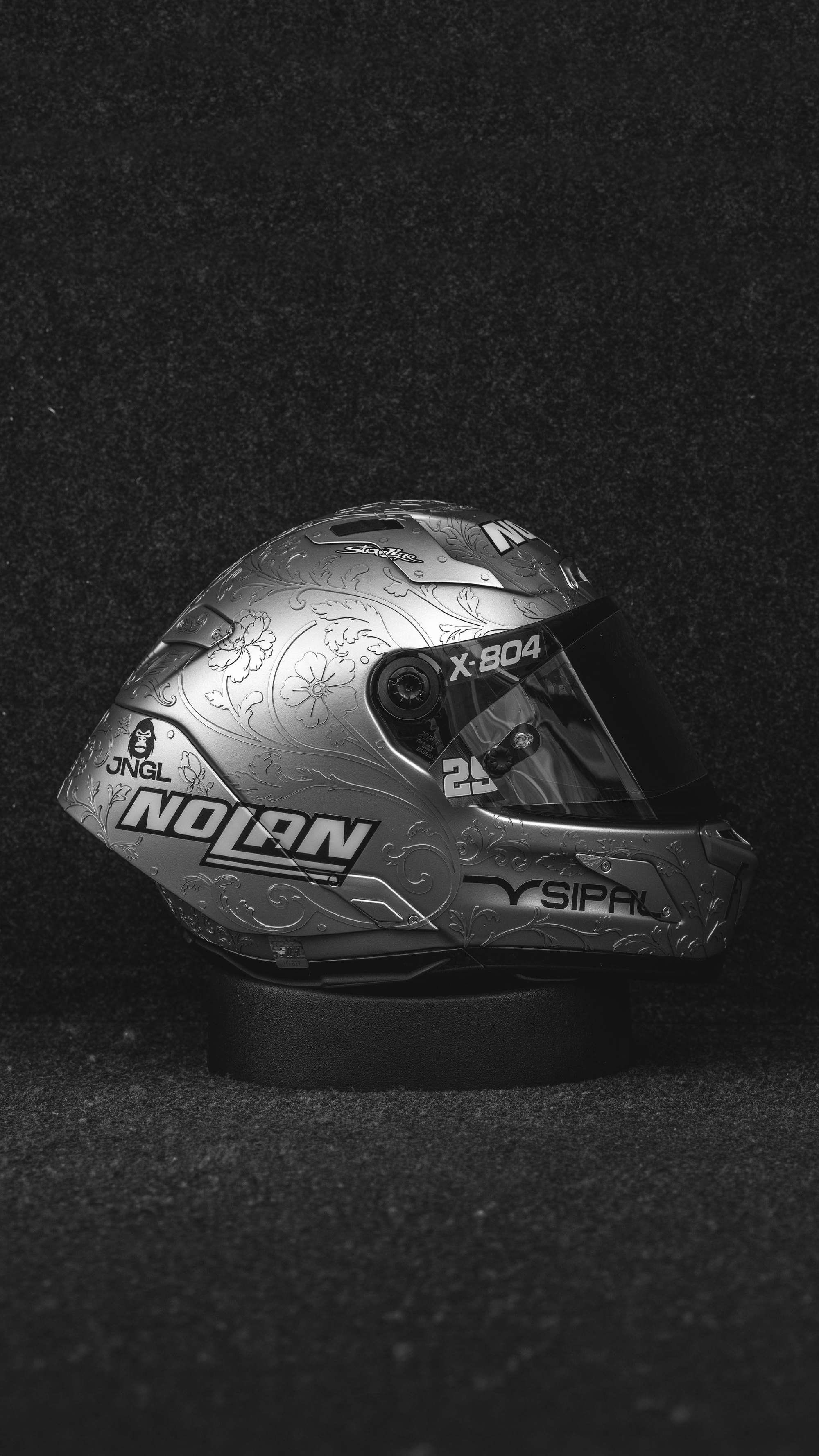
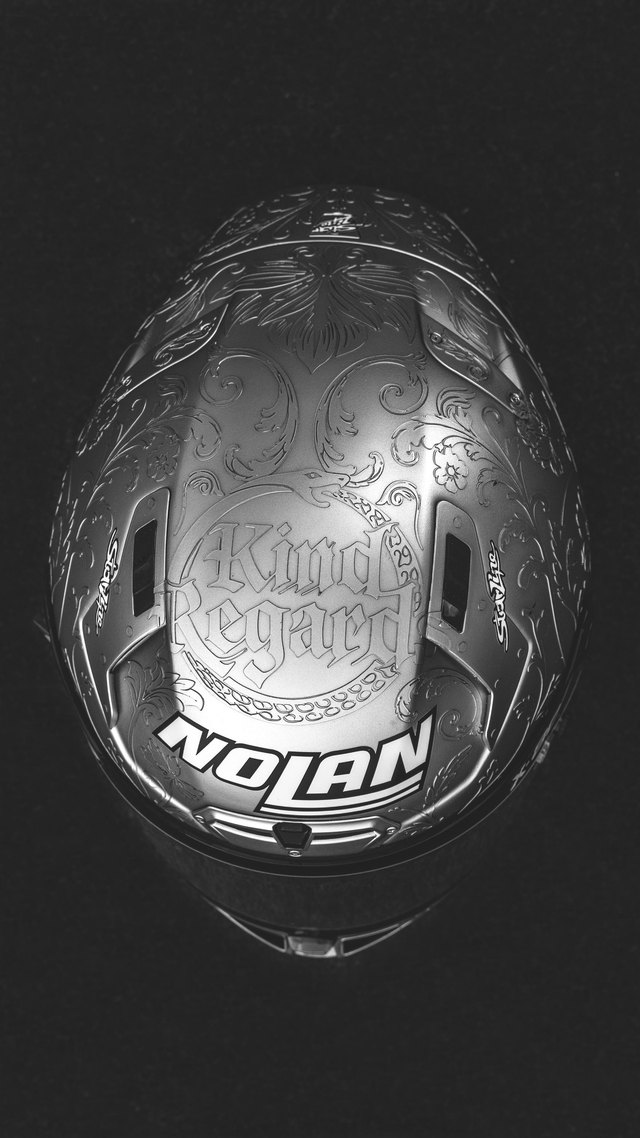
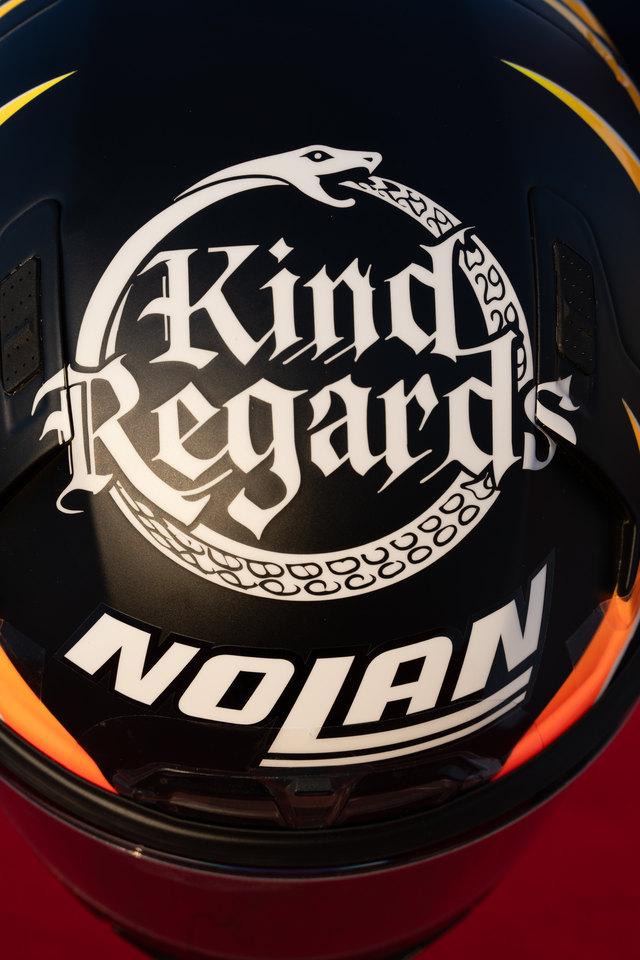
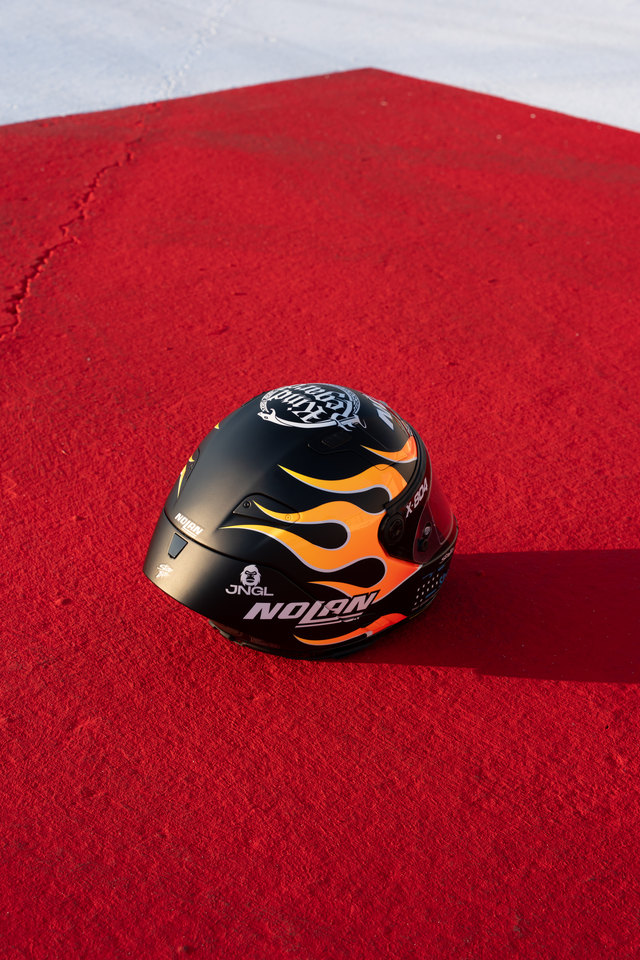
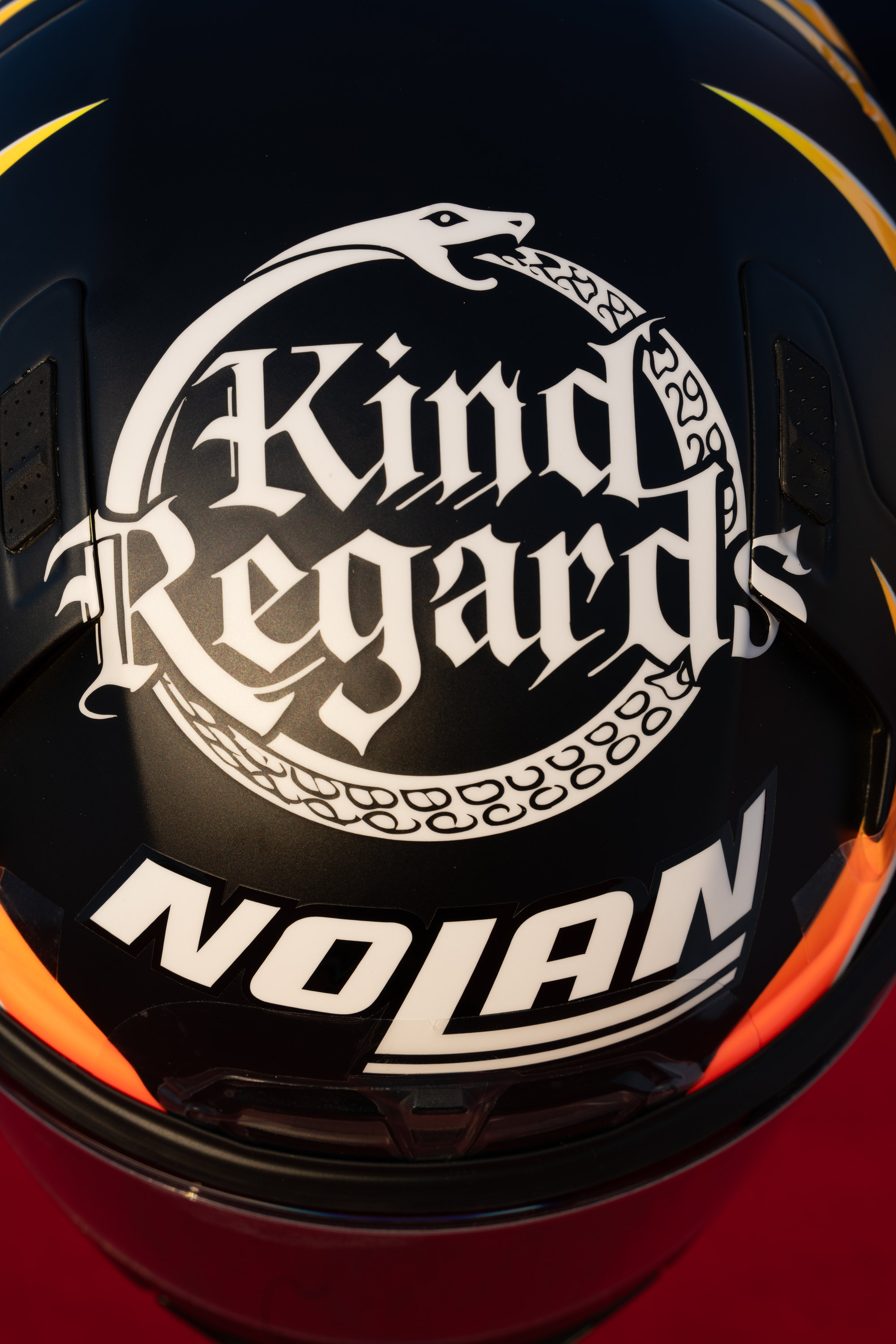
Mugello — detail of the Kind Regards mark.01 / Kind Regards
Mugello ↓
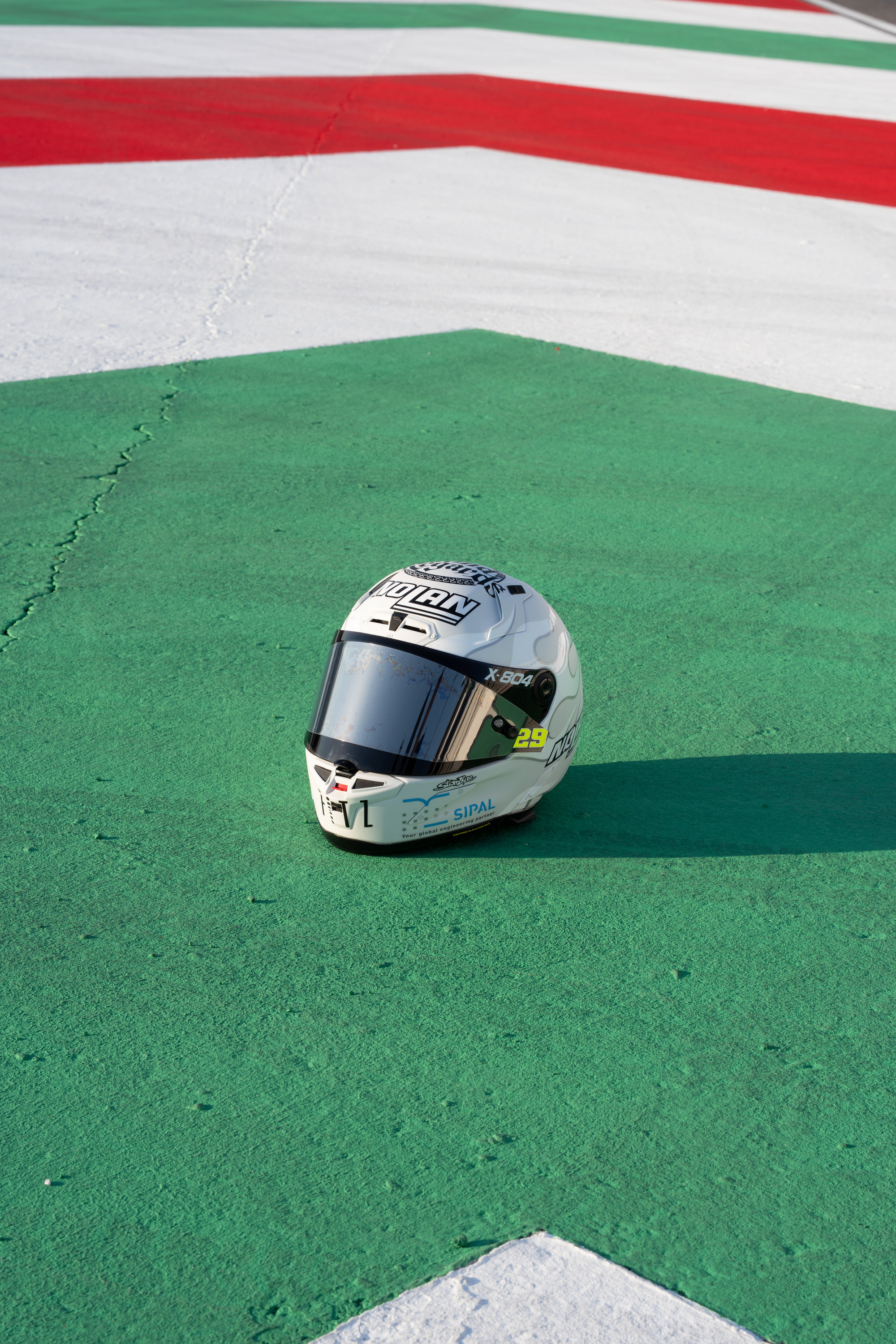
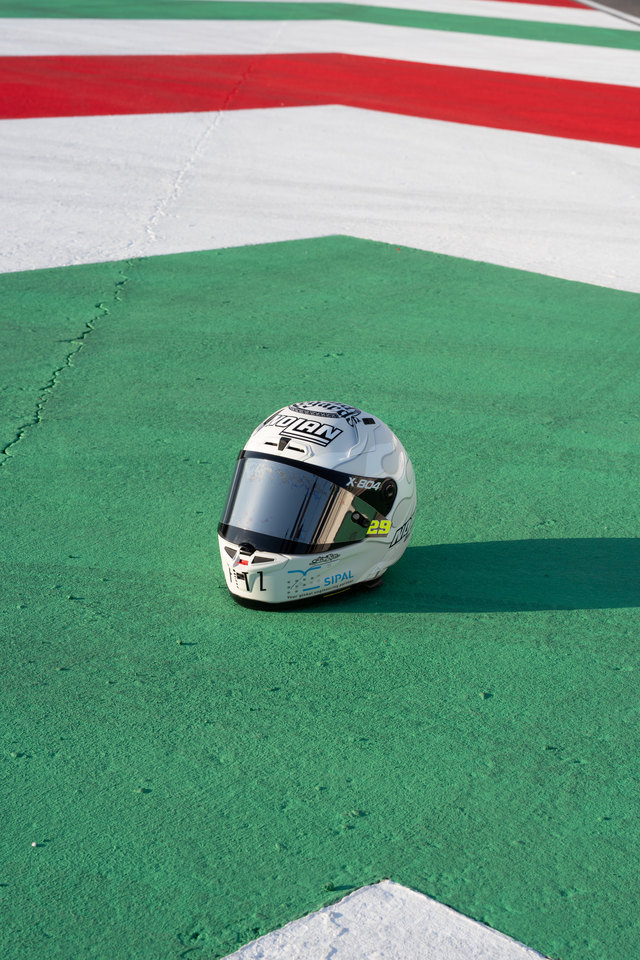
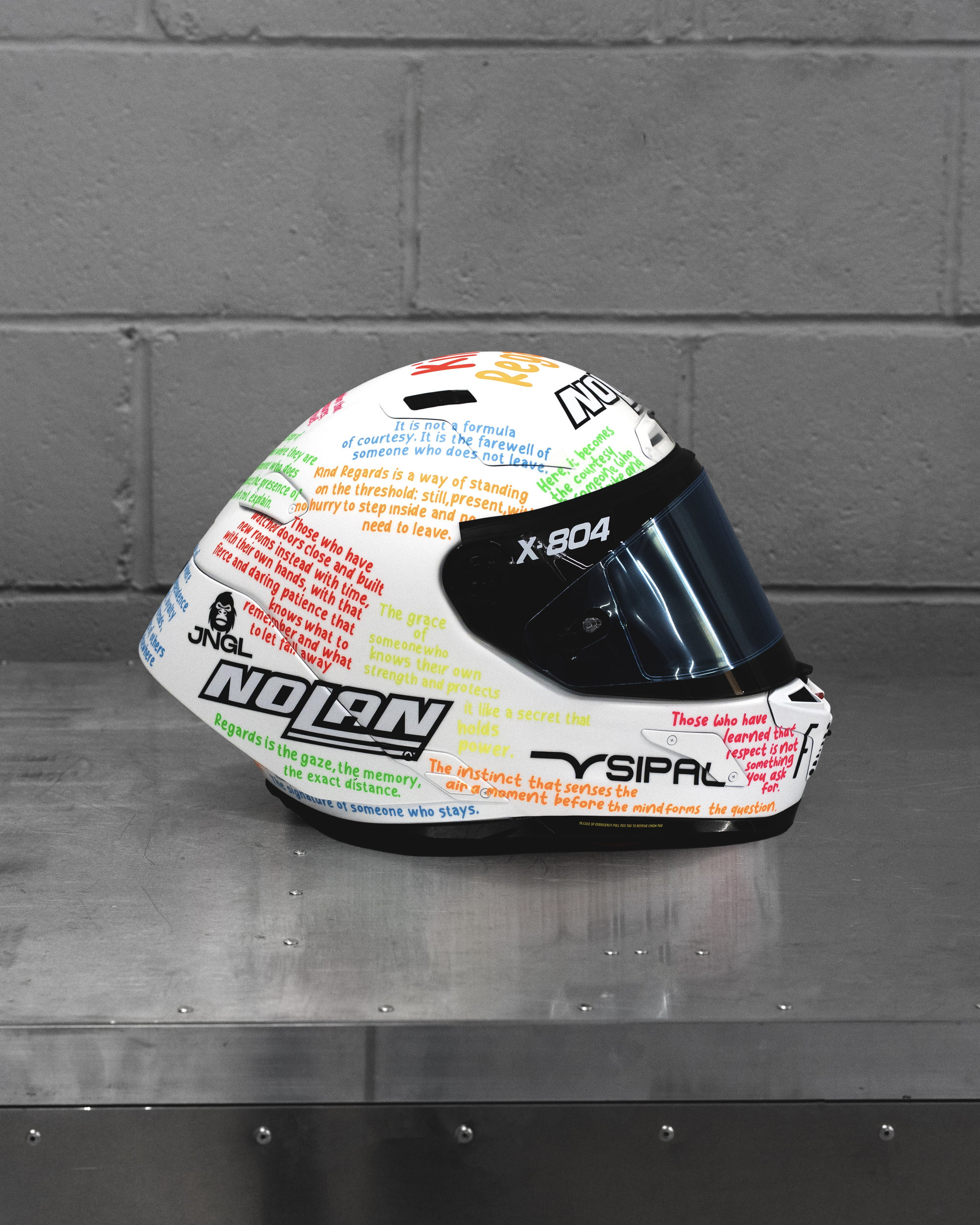
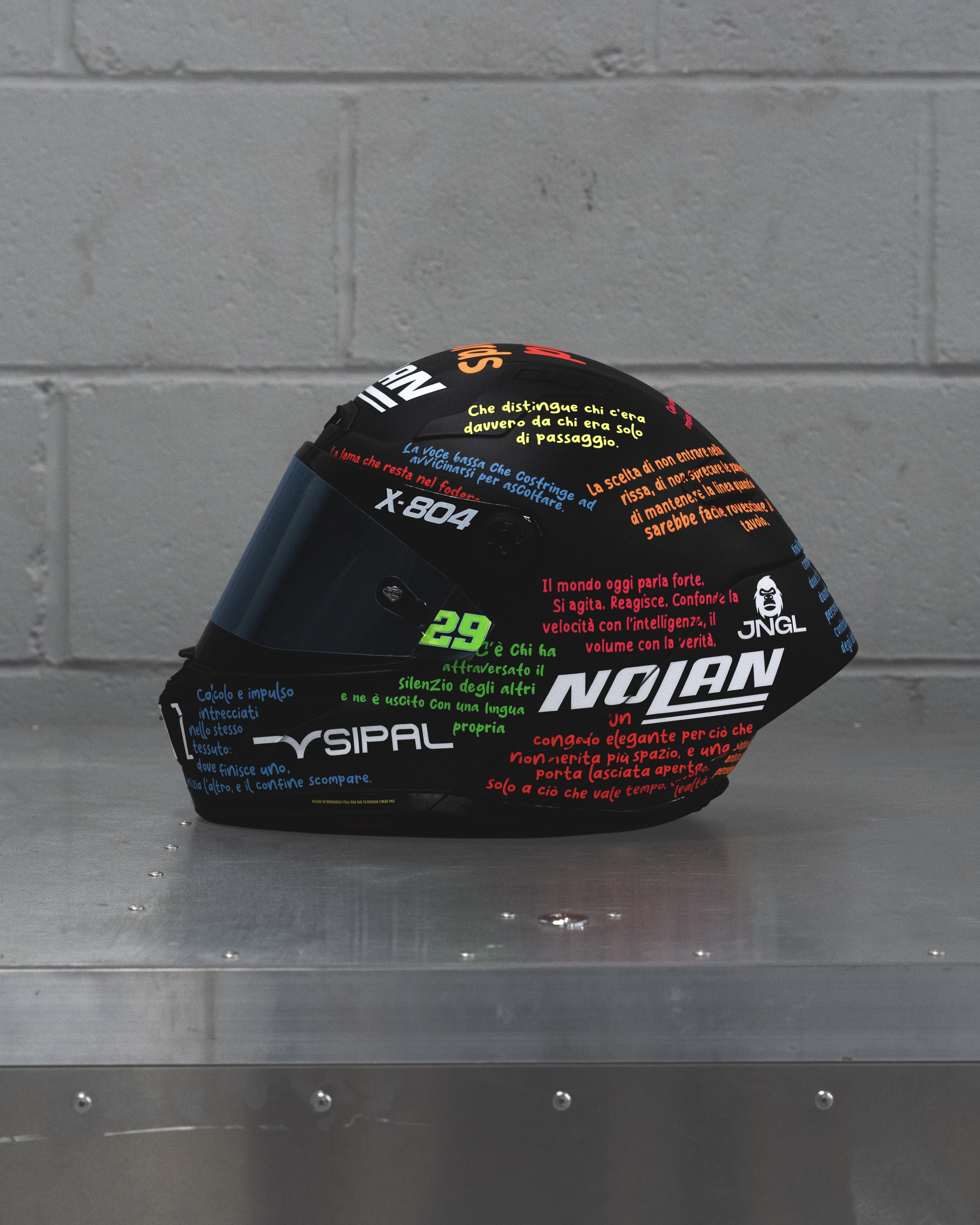
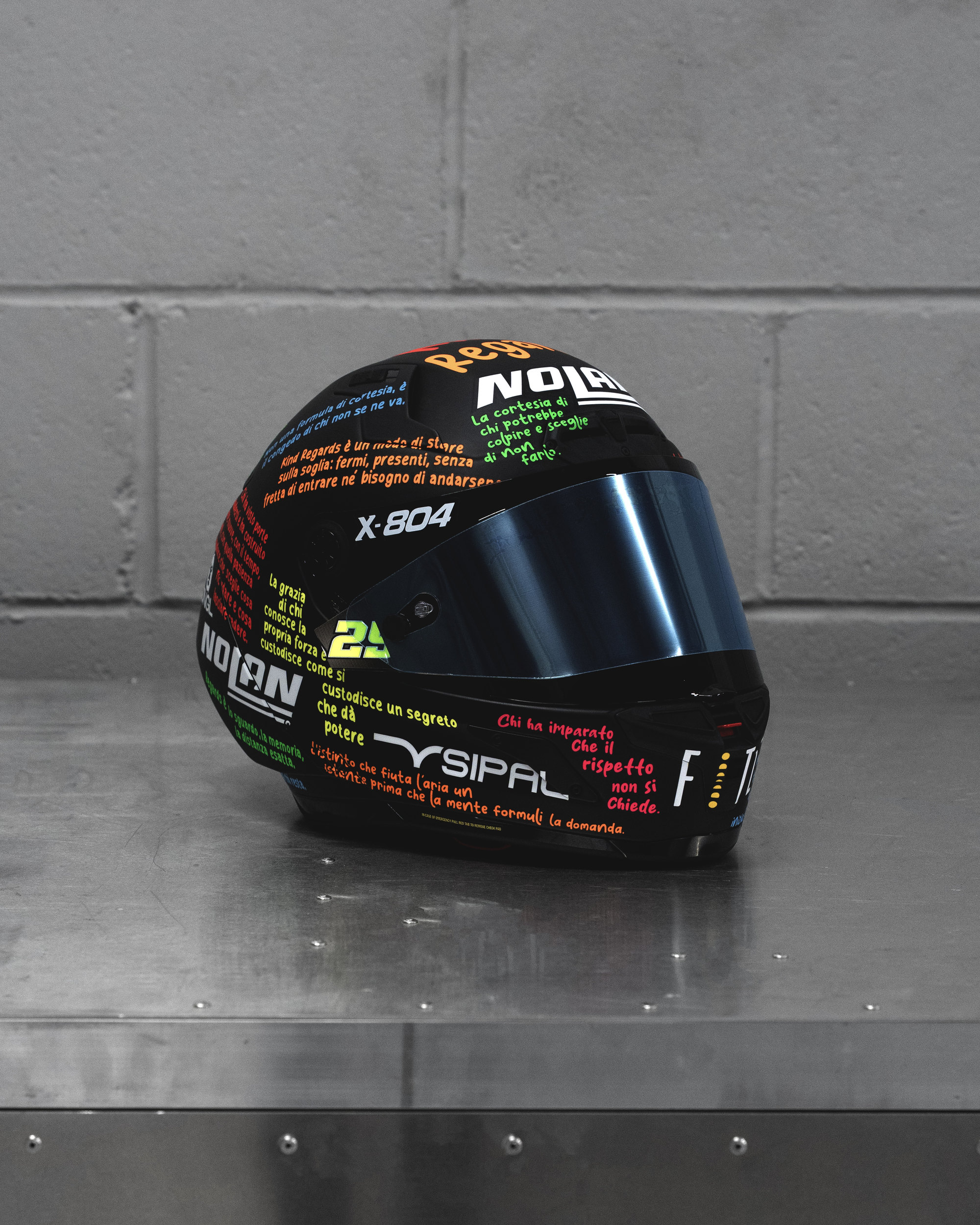
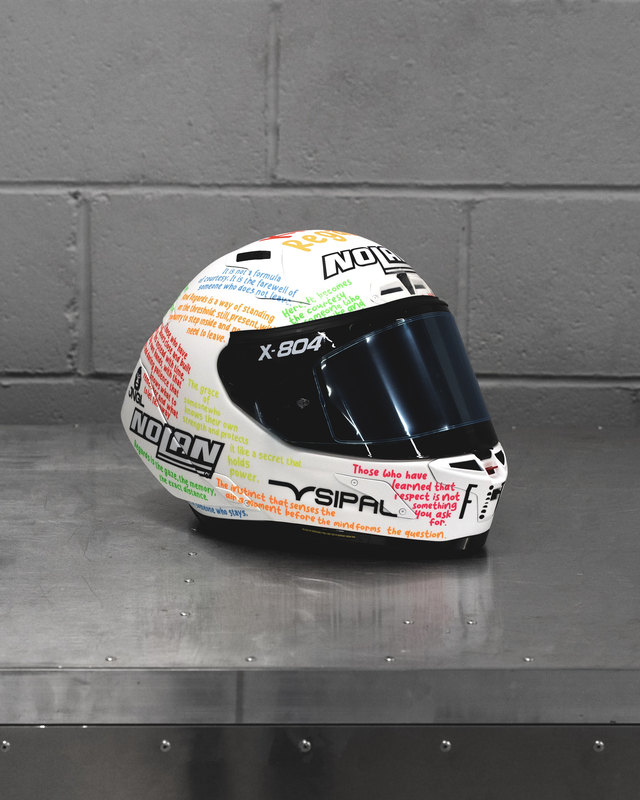
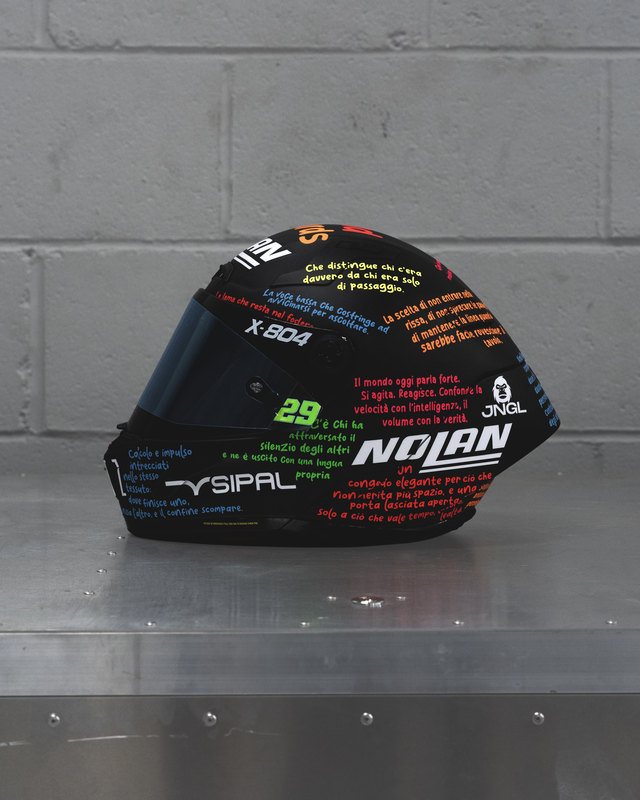
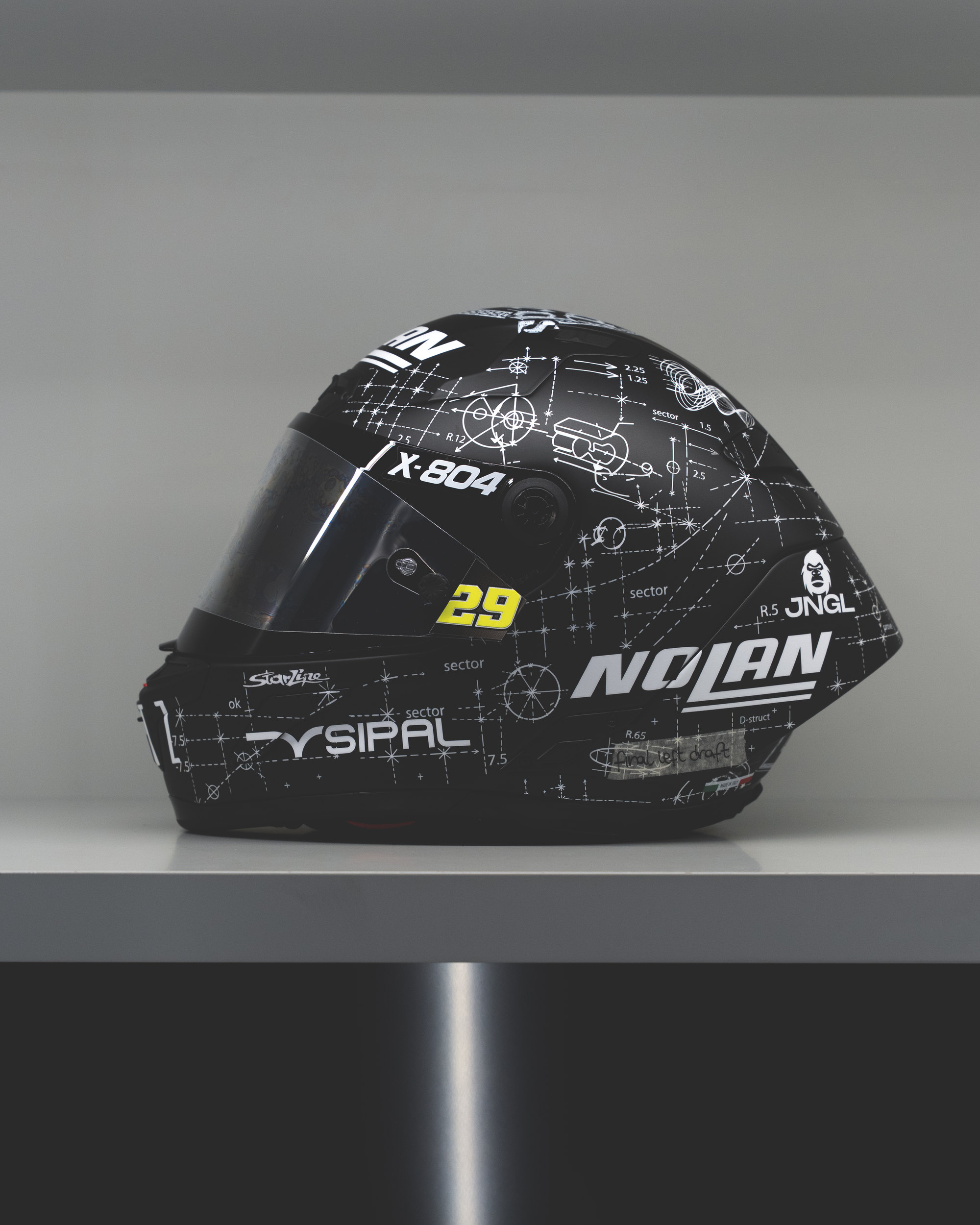
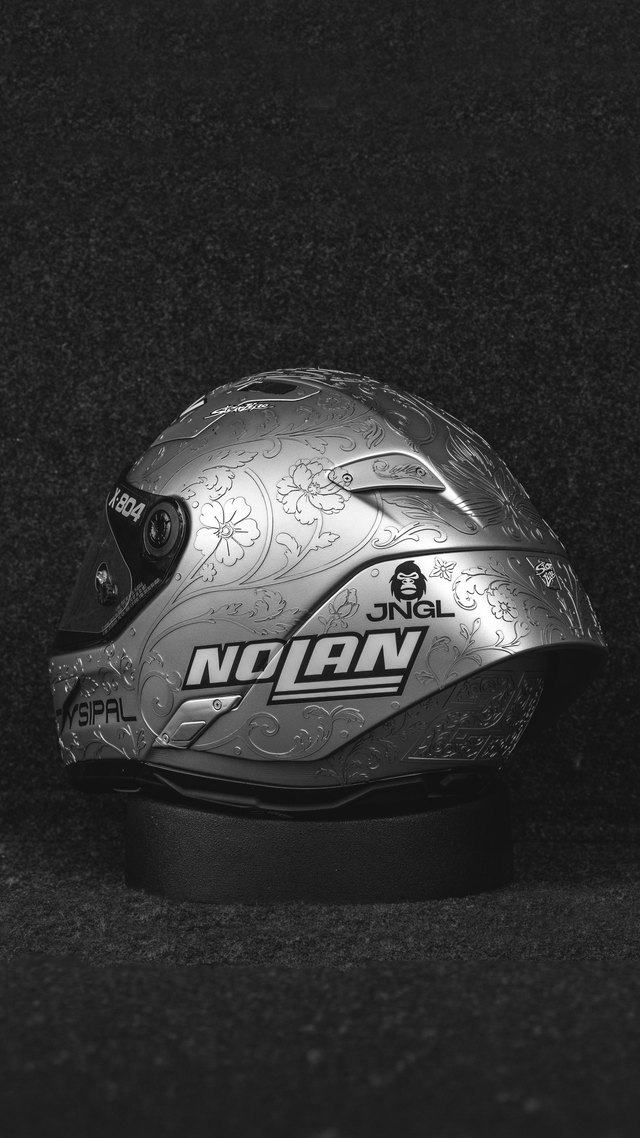
Mugello — helmet on the kerb, side view.Mugello / Kind Regards

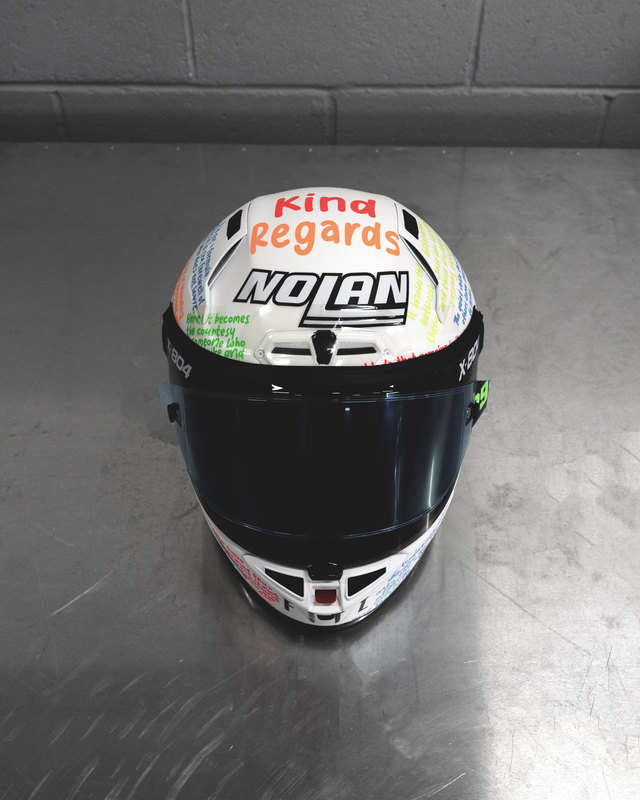
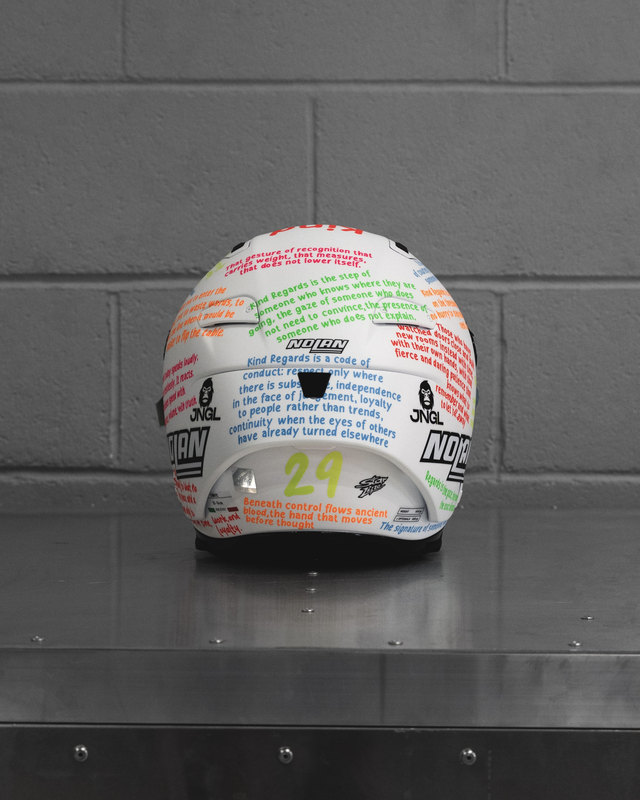
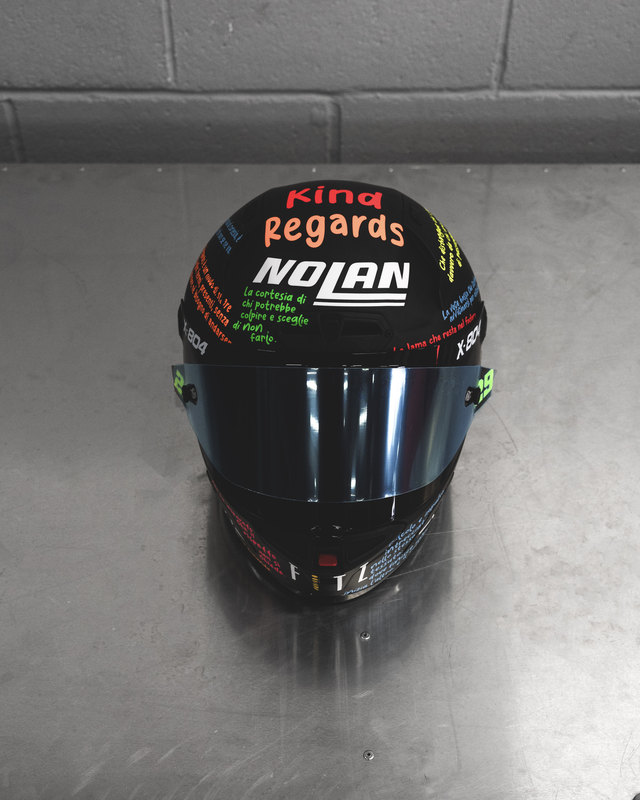
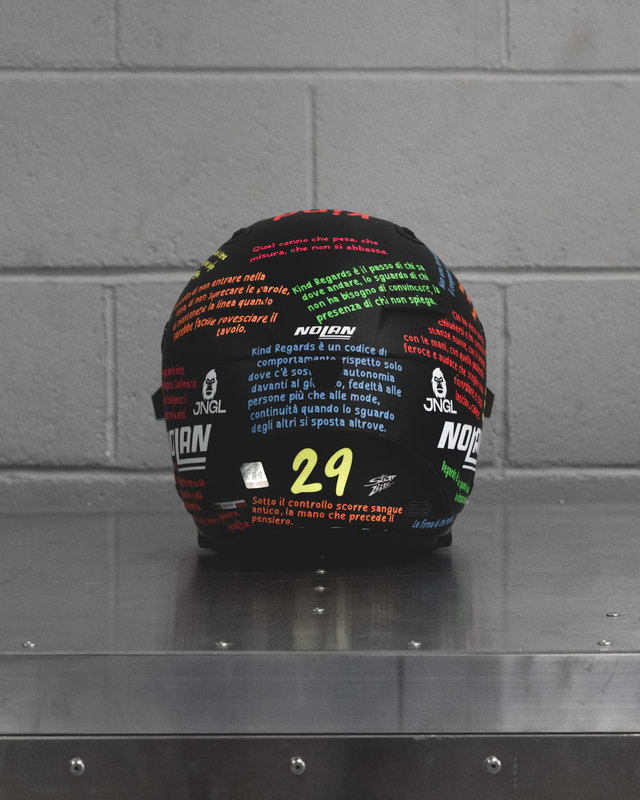
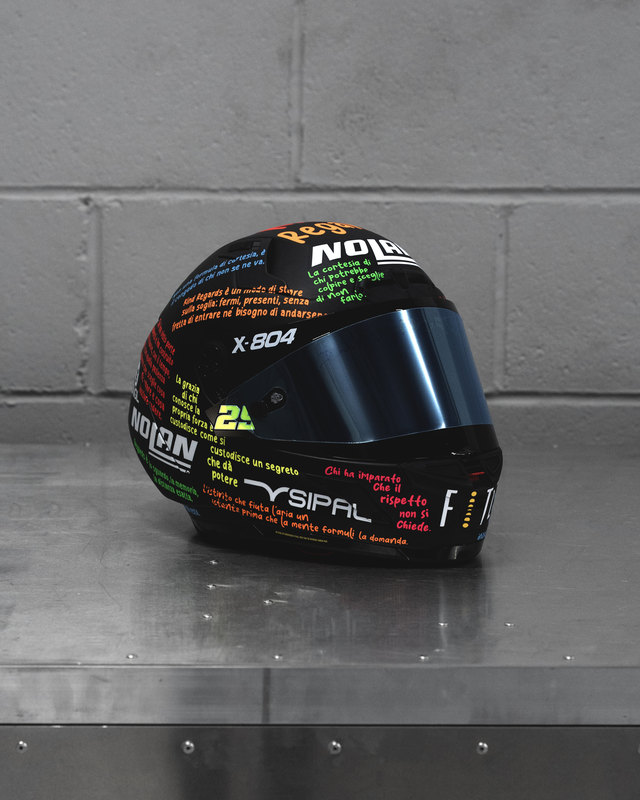
Kind Regards.

The opening chapter explores instinct and the choice of how to respond.
The chapter / 01

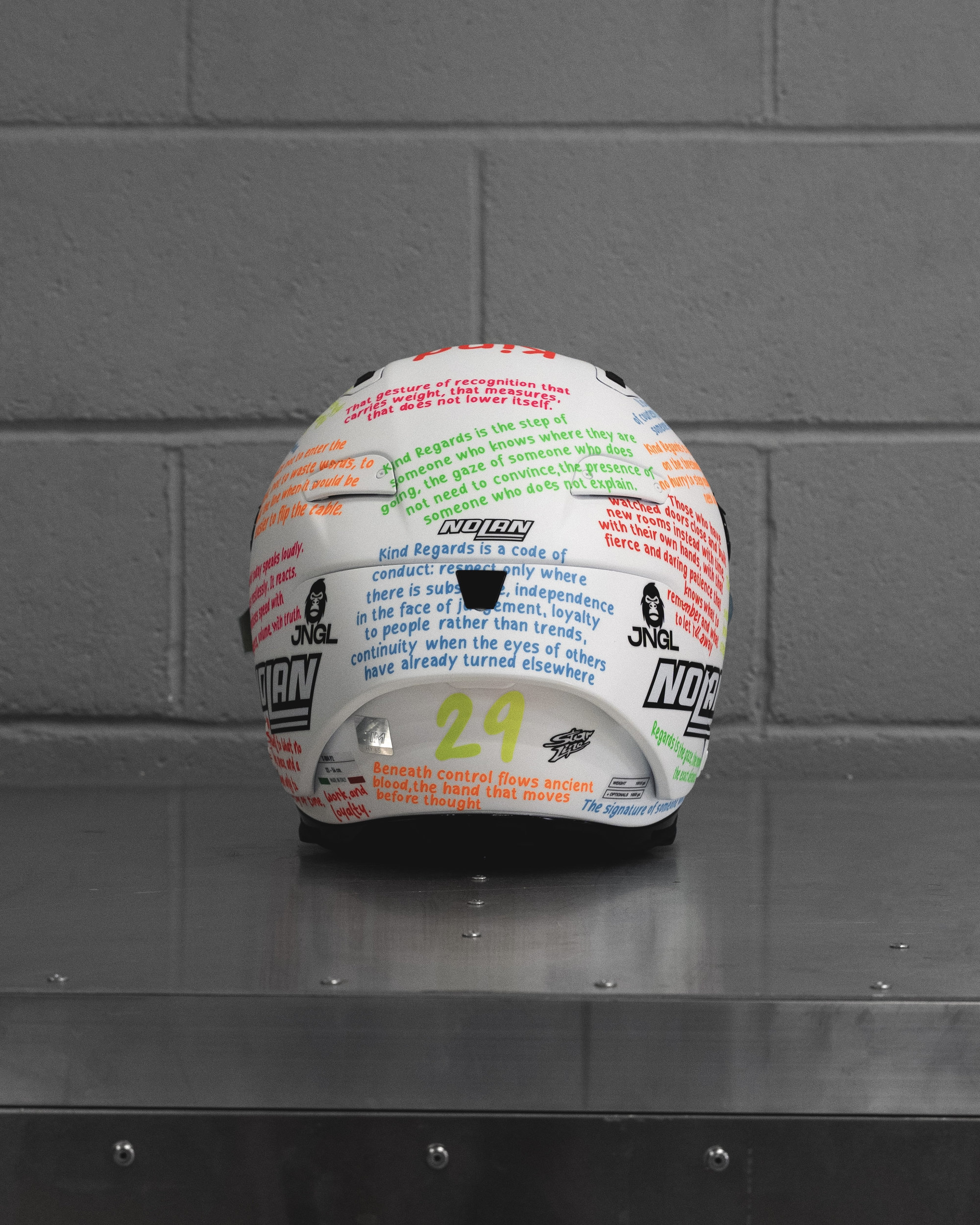
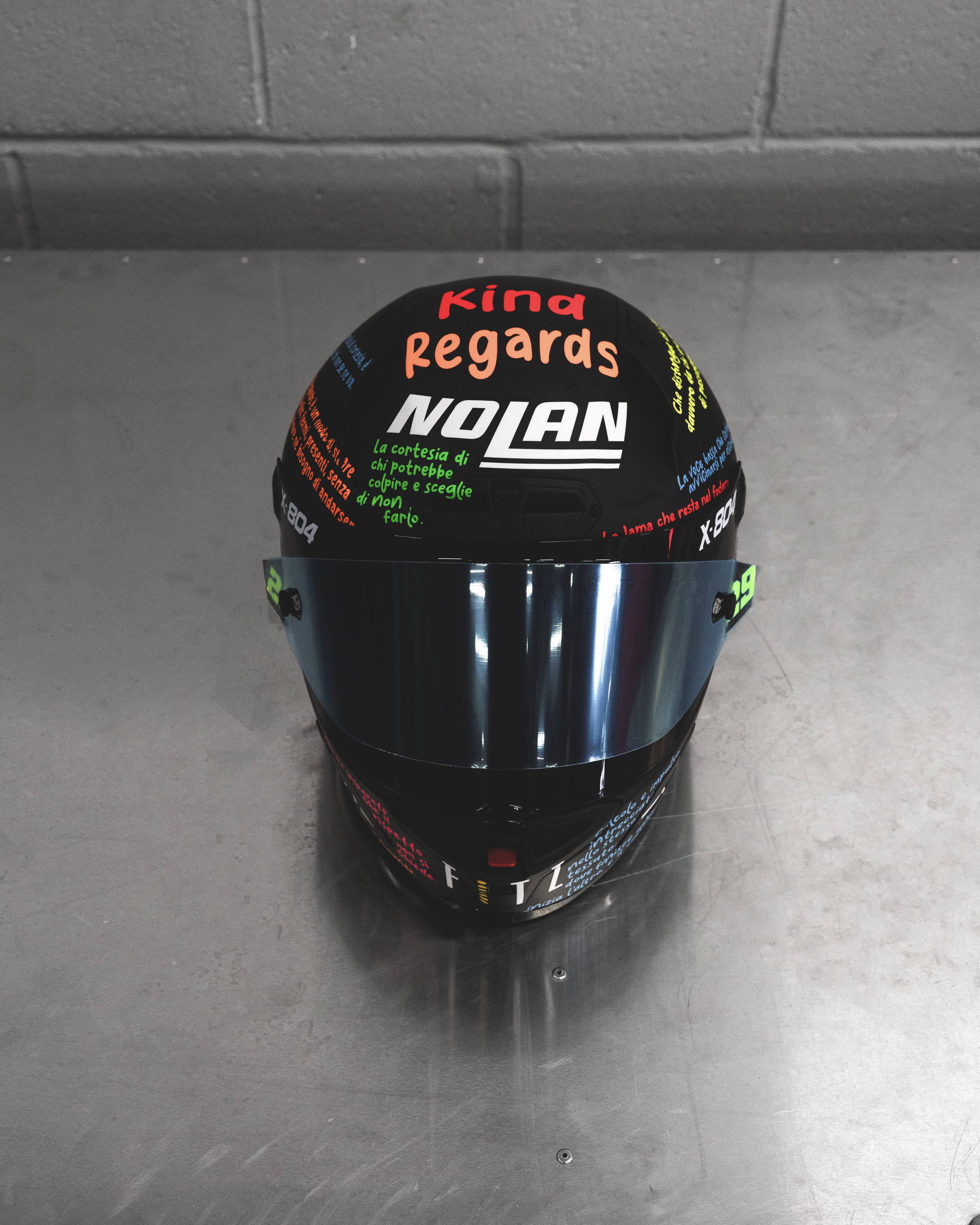
Kind Regards brings two words used to close a letter onto the helmet. They become a signature associated with kindness as personal discipline: choosing when to speak, giving time to relationships with substance and staying loyal to people. Instinct remains part of one’s character; with time, it can be understood and governed.

Alongside the signature is the Ouroboros, the serpent biting its own tail. Within the project it evokes cycles and renewal. The name and symbol return in later chapters, each time within a different design.
Assen.

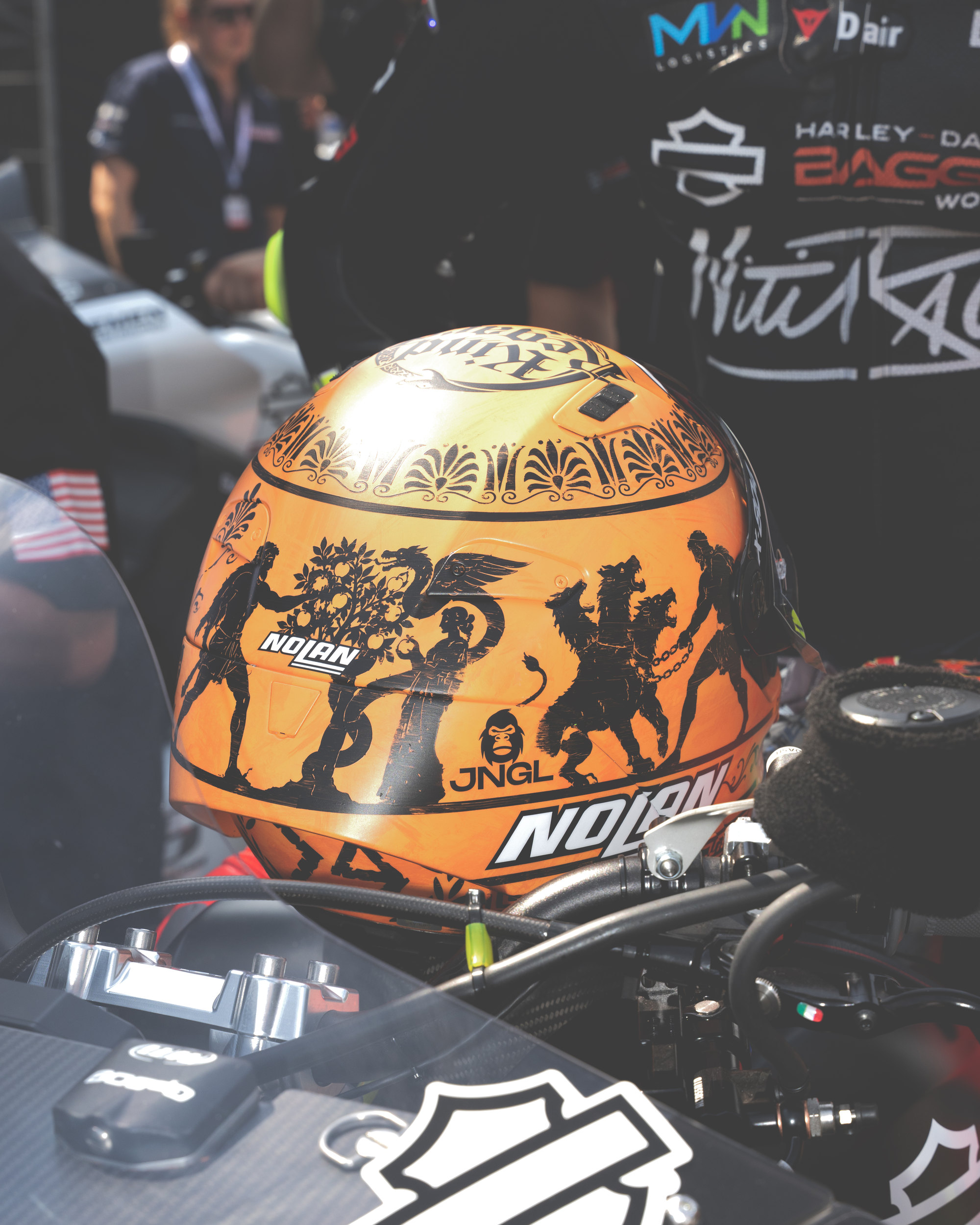
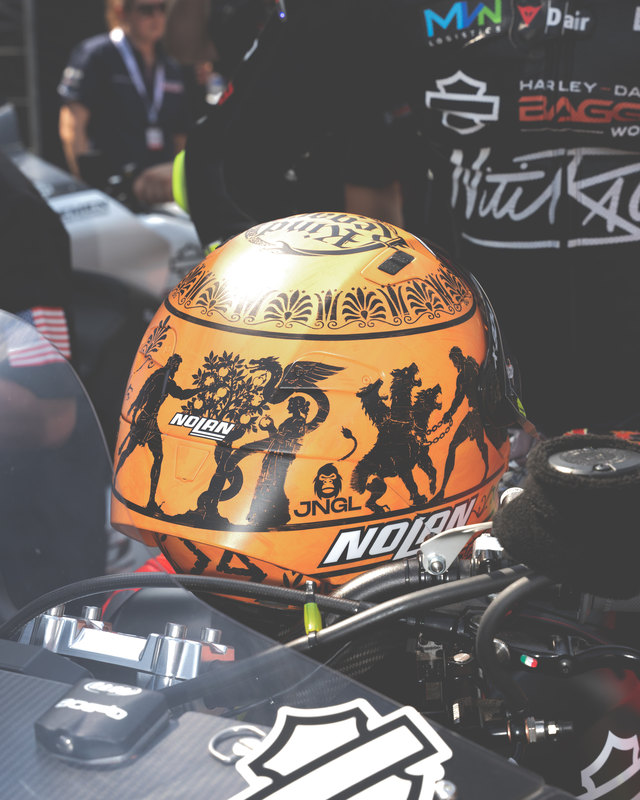
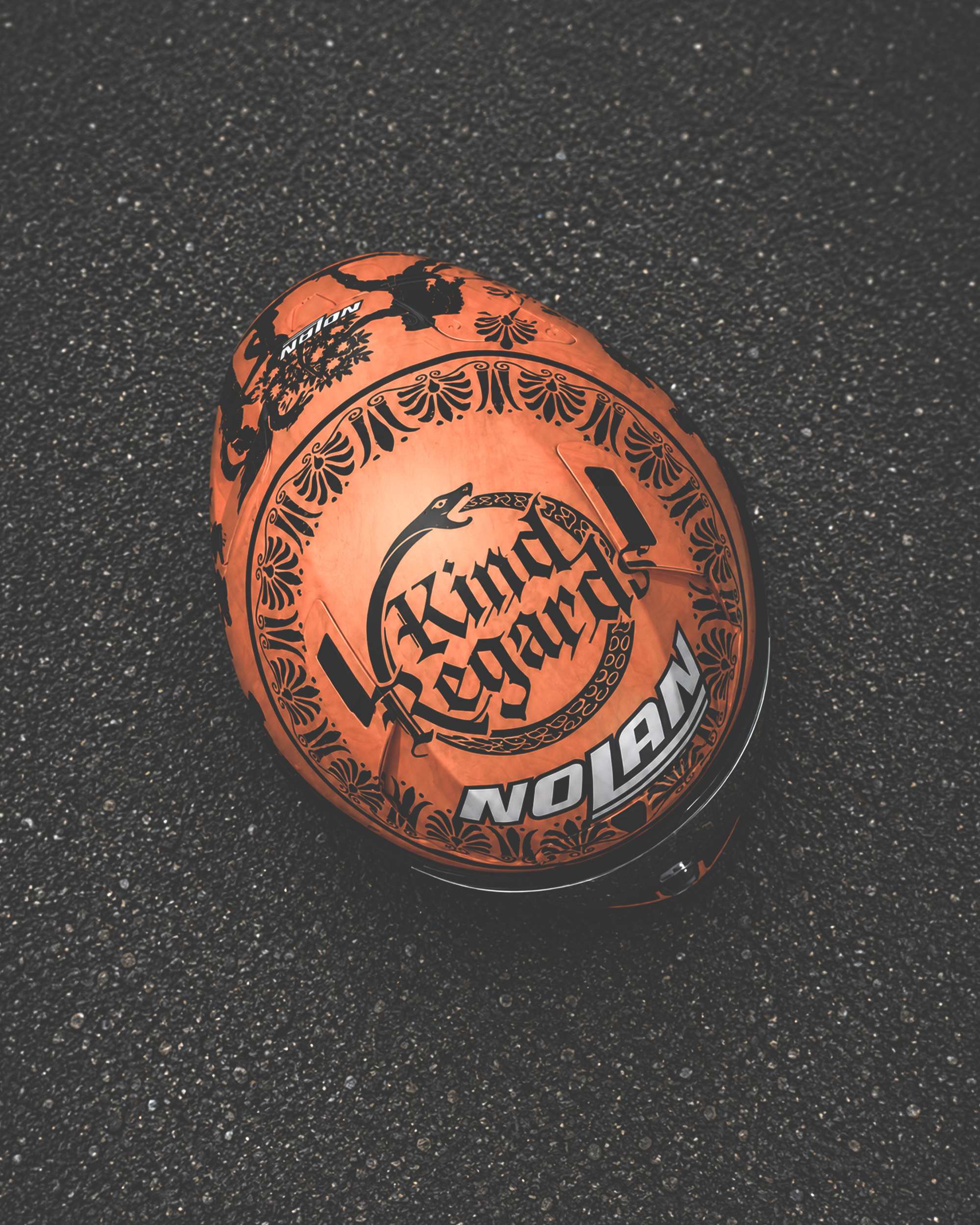
Three of Hercules’ labours, drawn in the language of ancient Greek vase painting.

The chapter / 02

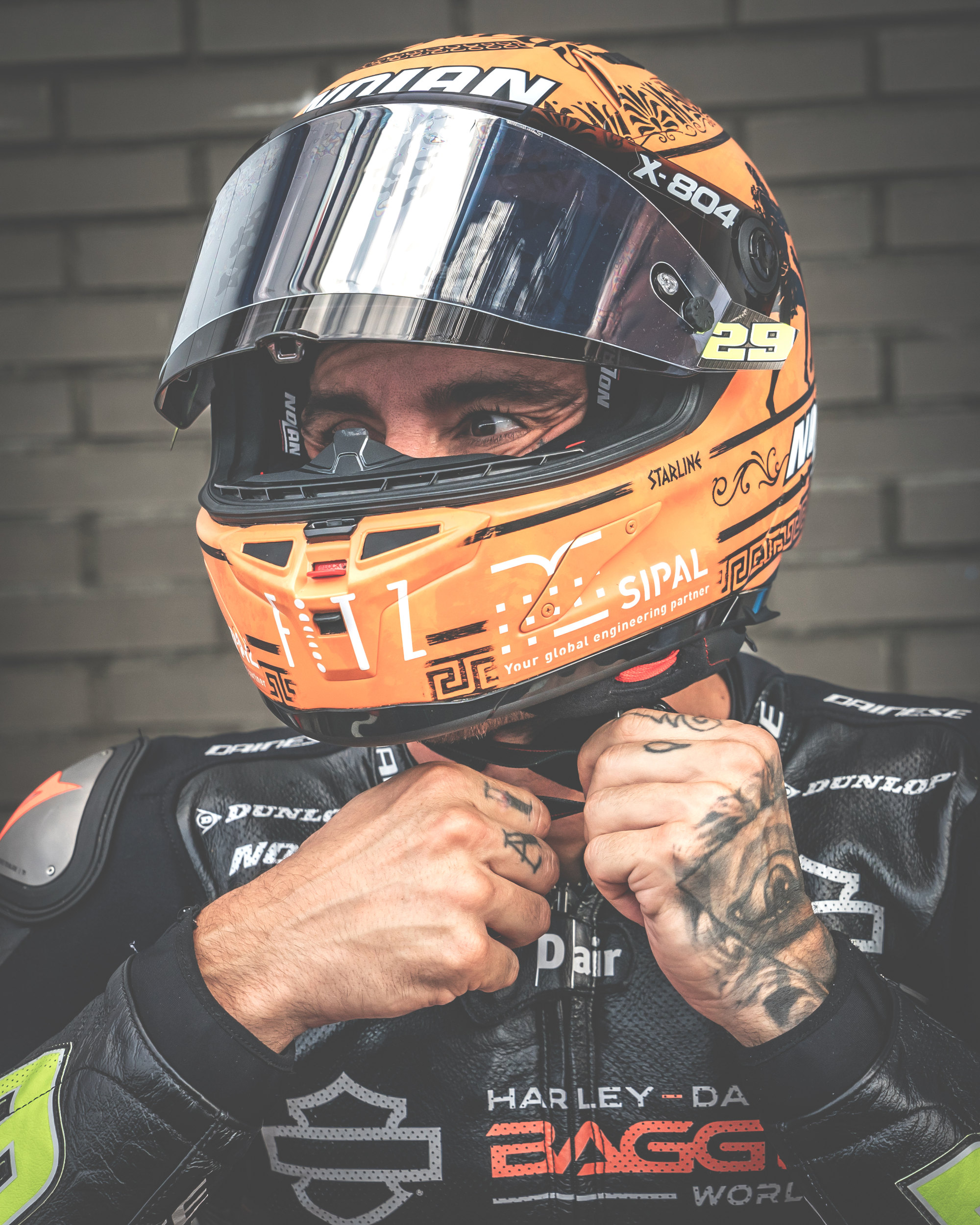
Hand-painted illustrations depict the Nemean Lion, the Golden Apples of the Hesperides and Cerberus. The lion stands for confronting what seems invincible. The apples evoke patience and discipline; Cerberus turns the trial towards the darker part of oneself.

Walter Giordano and Andrea Iannone bring these mythological scenes onto contemporary racing equipment. Orange, black and white distinguish the helmet created for Assen. The Ouroboros returns among the images: the second chapter considers change through a test of character.

Silverstone.

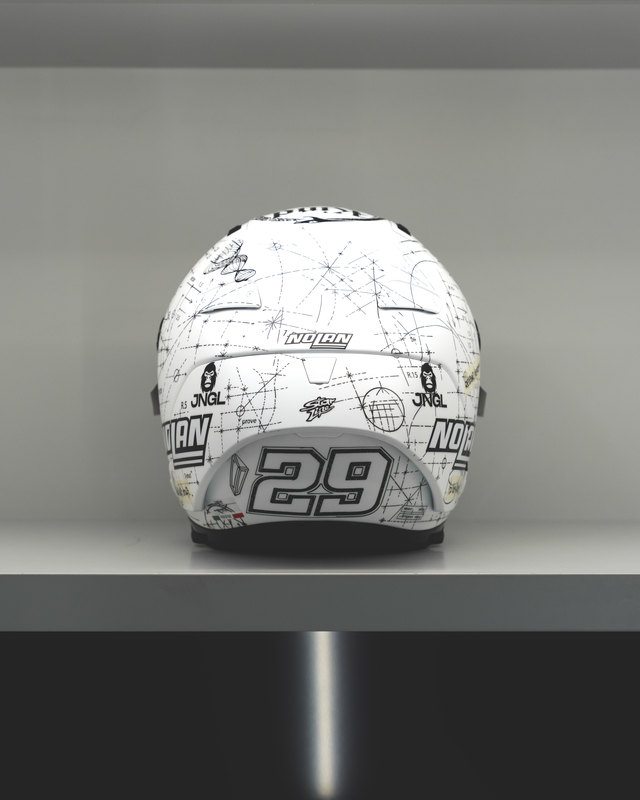
The shell becomes a blank page, filled with a child’s free handwriting.

The chapter / 03

The third chapter begins with curiosity and the ability to keep asking questions. Thoughts cover the surface like notes gathered at different moments. The marker leaves a deliberately imperfect line, without seeking typographic precision.

The phrases touch on kindness, courage, silence and responsibility towards others. Handwriting becomes part of the design. After Hercules’ trials, the story returns to the way we first discover the world, still willing to question what we know.
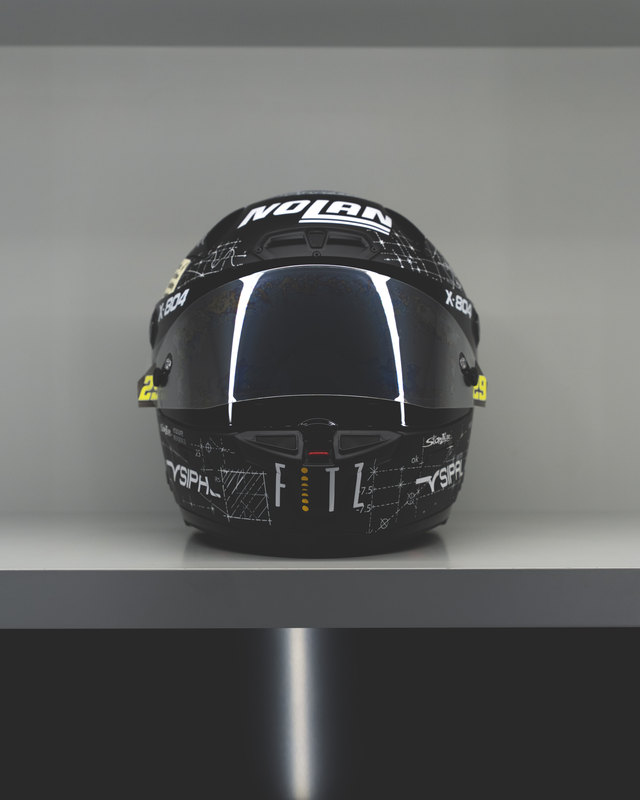
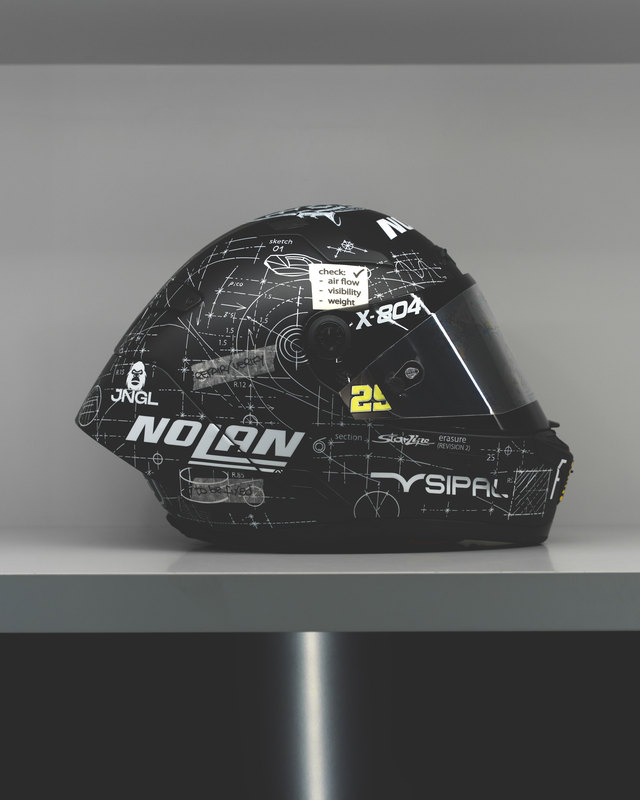
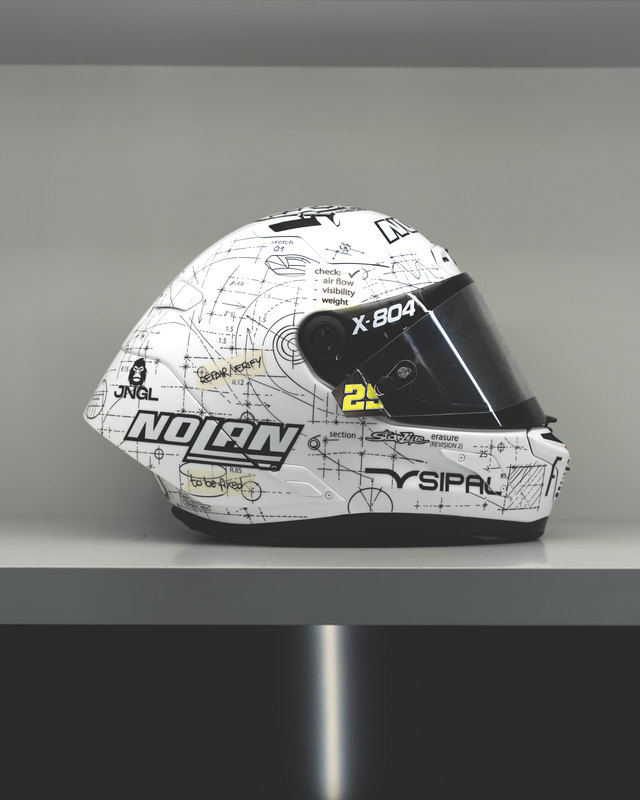
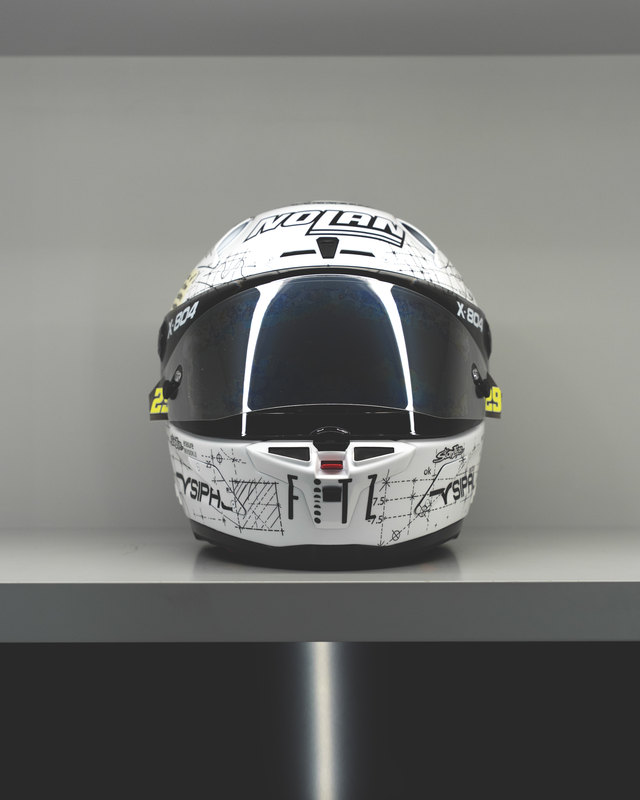
The Progress.

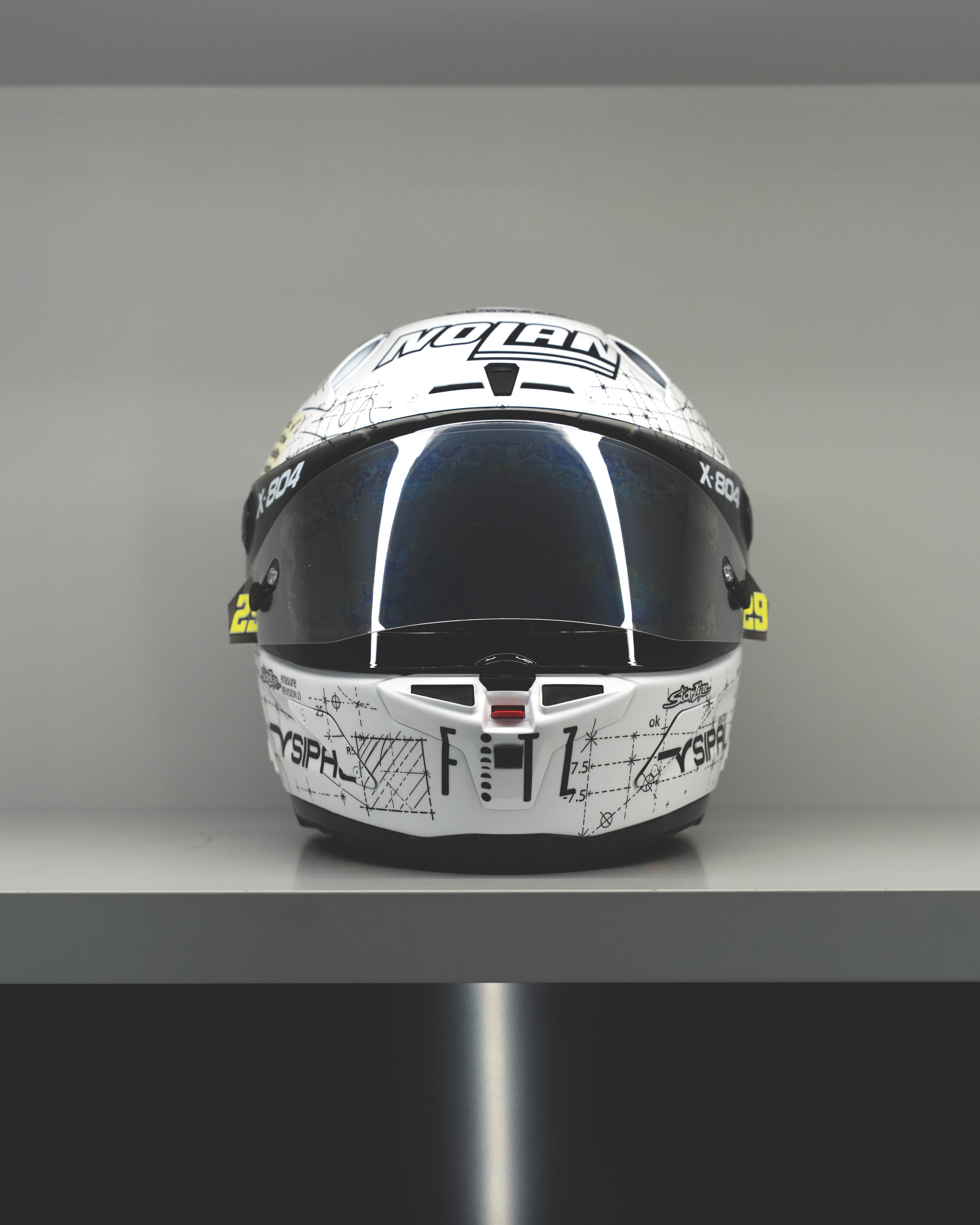
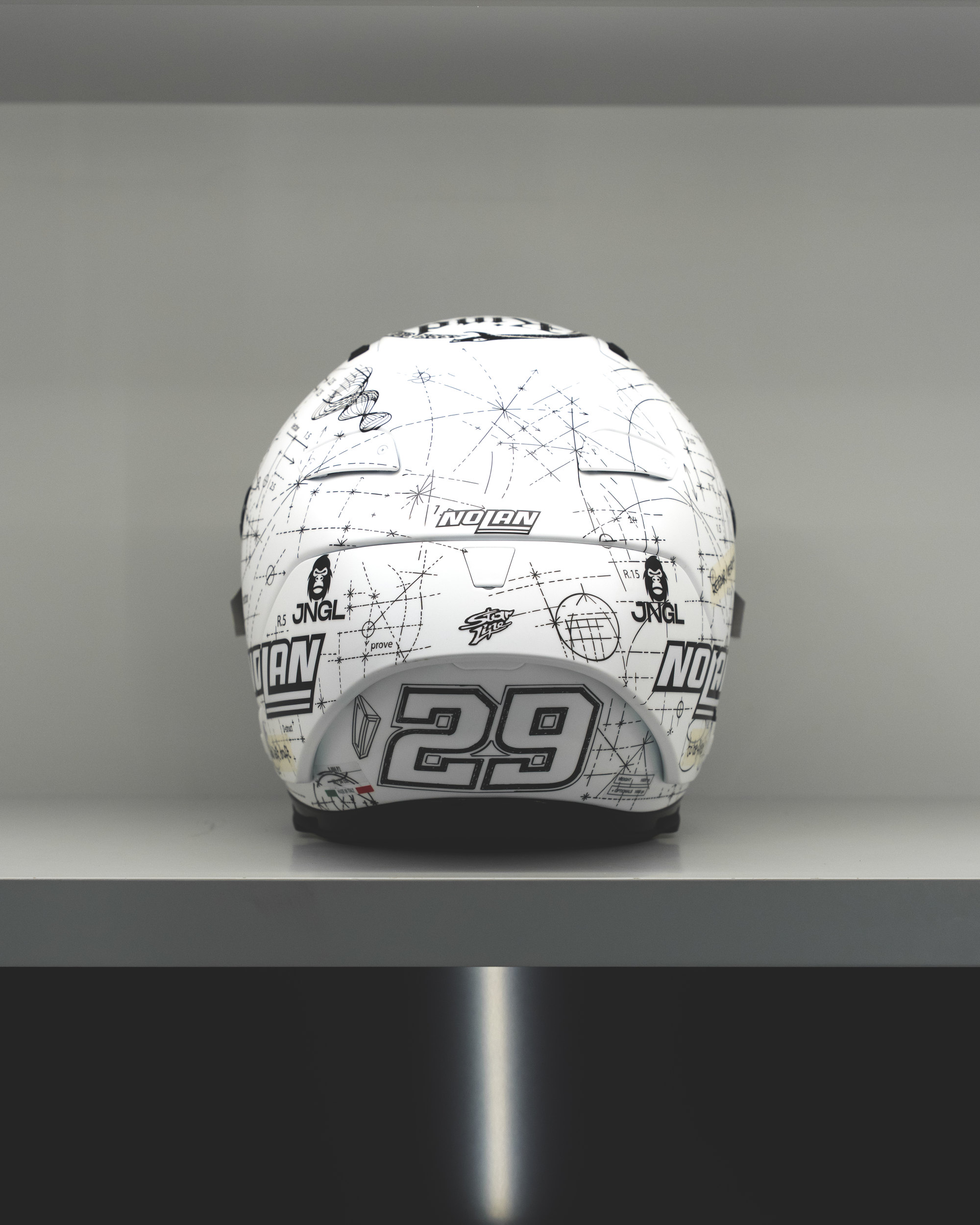
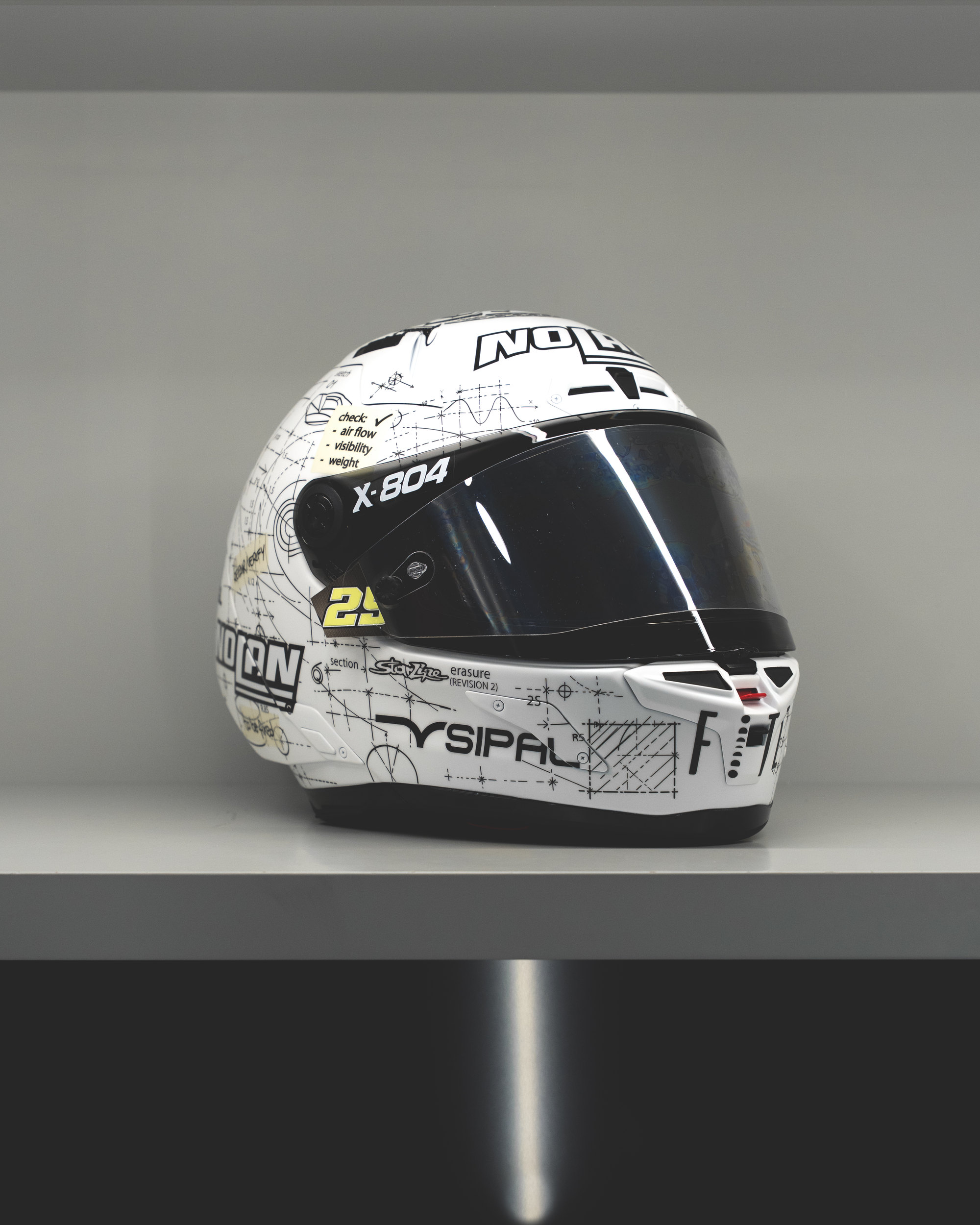
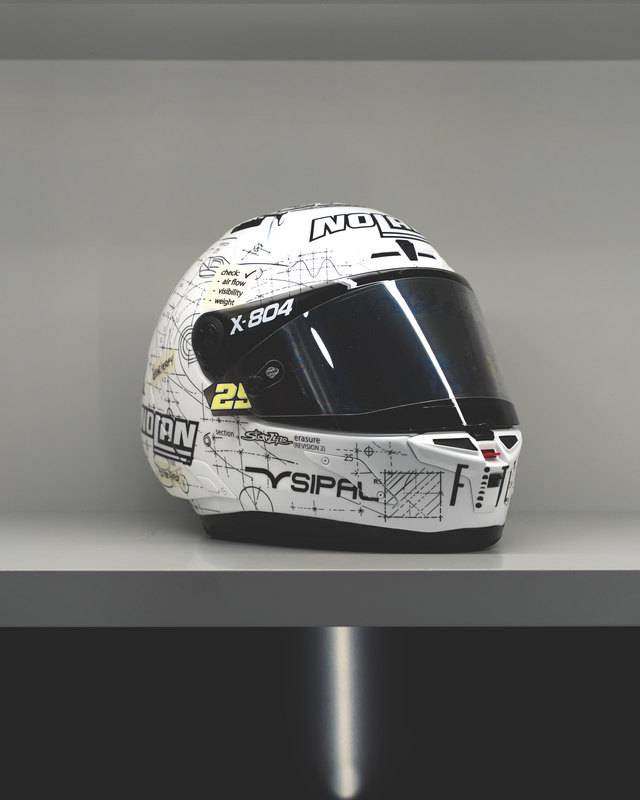
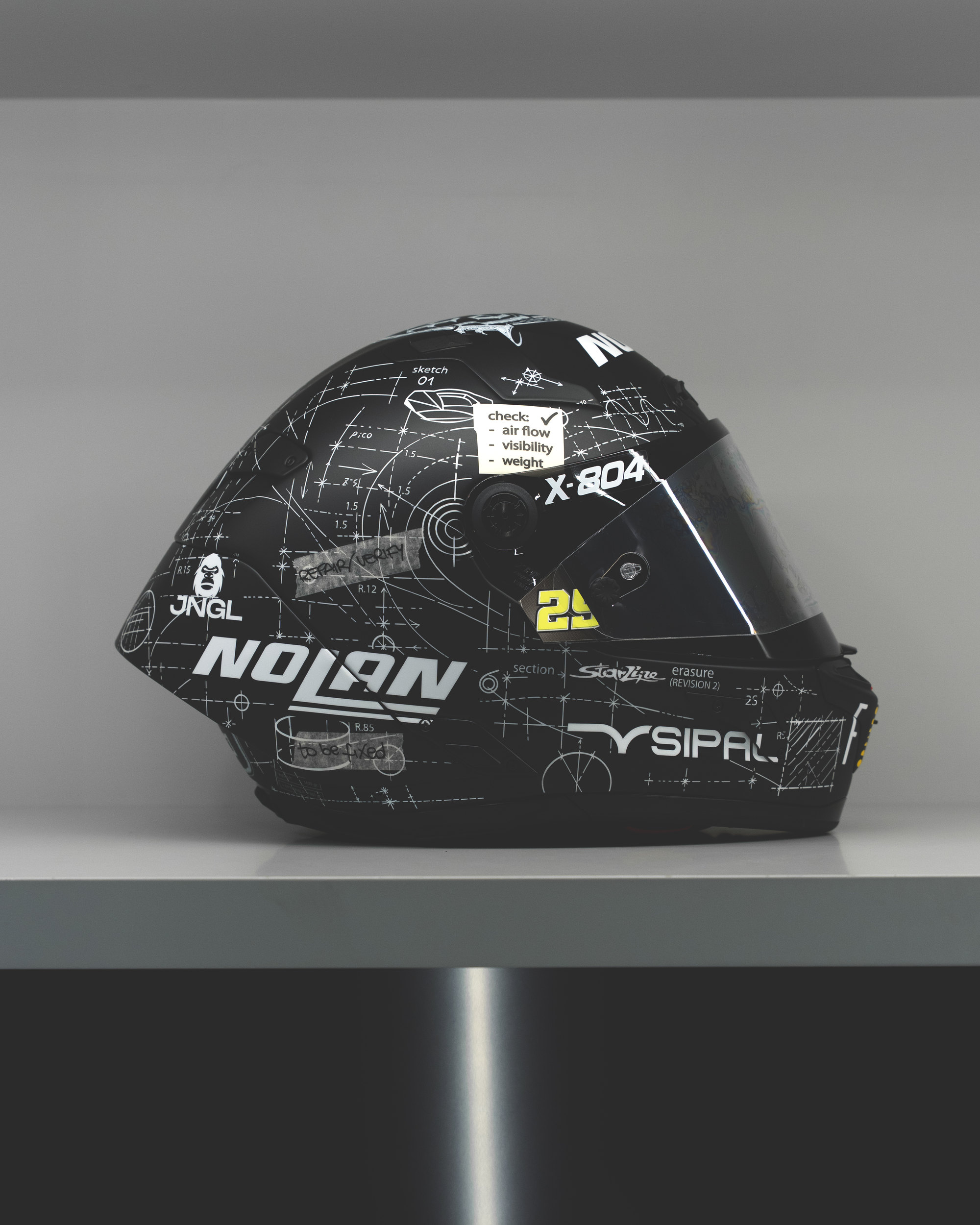
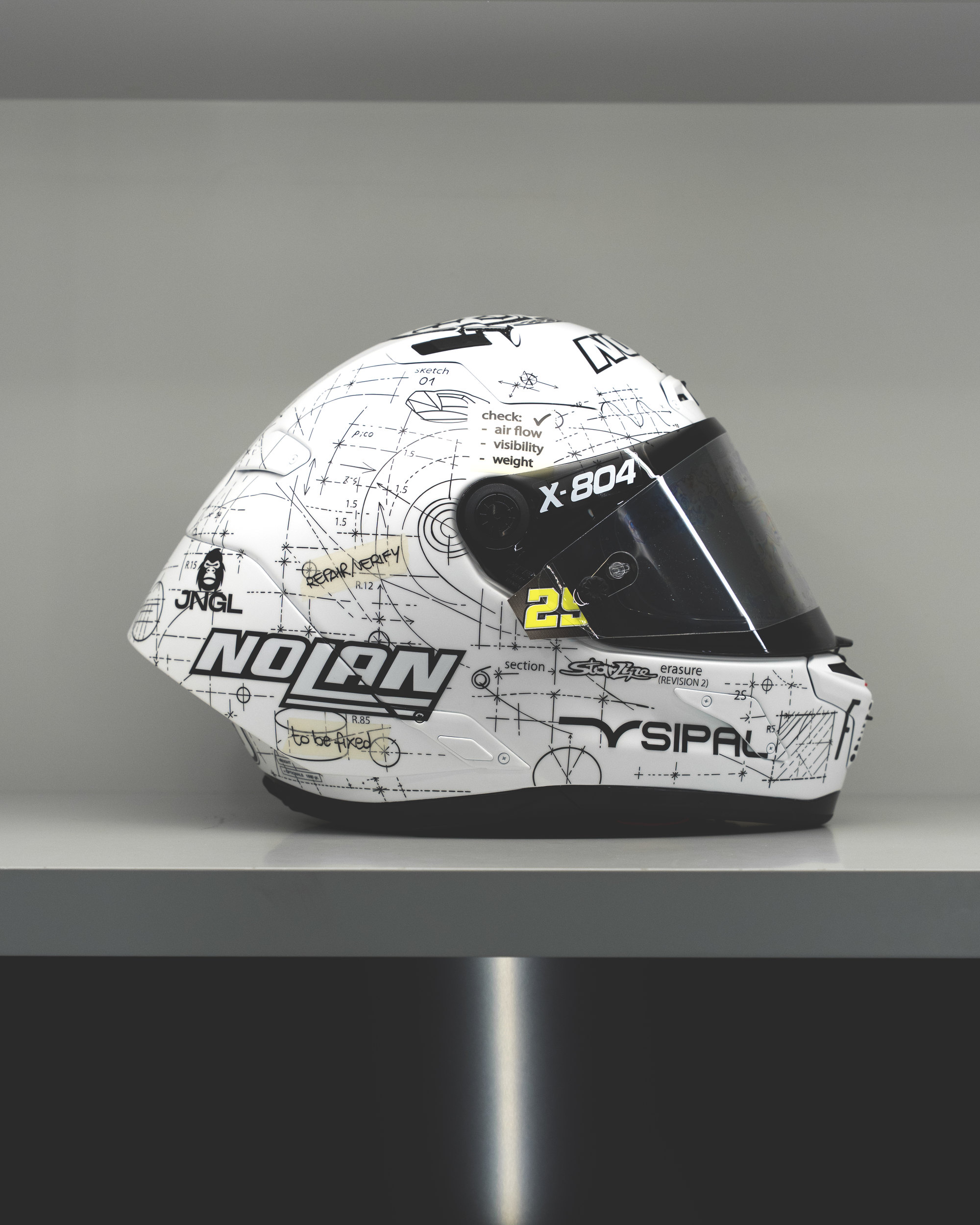
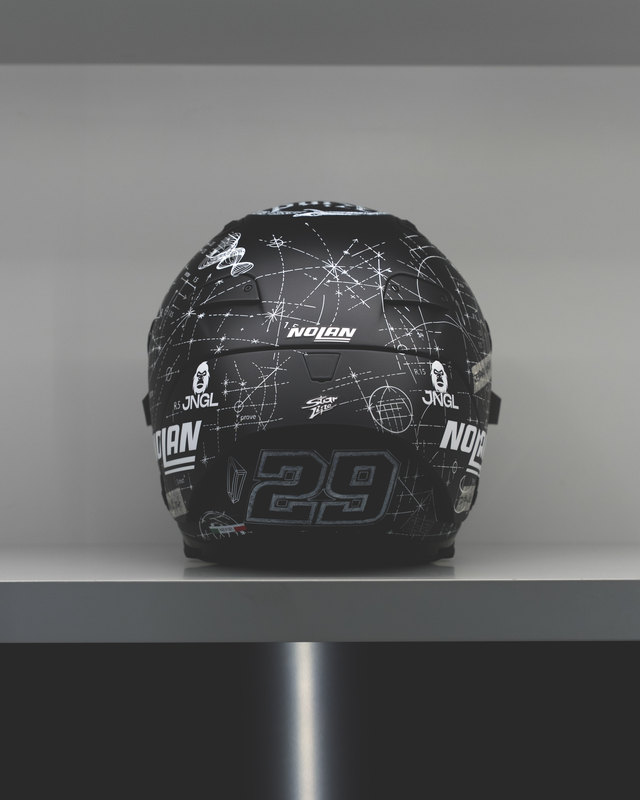
The Progress keeps the attempts and corrections of the workbench visible.

The chapter / 04

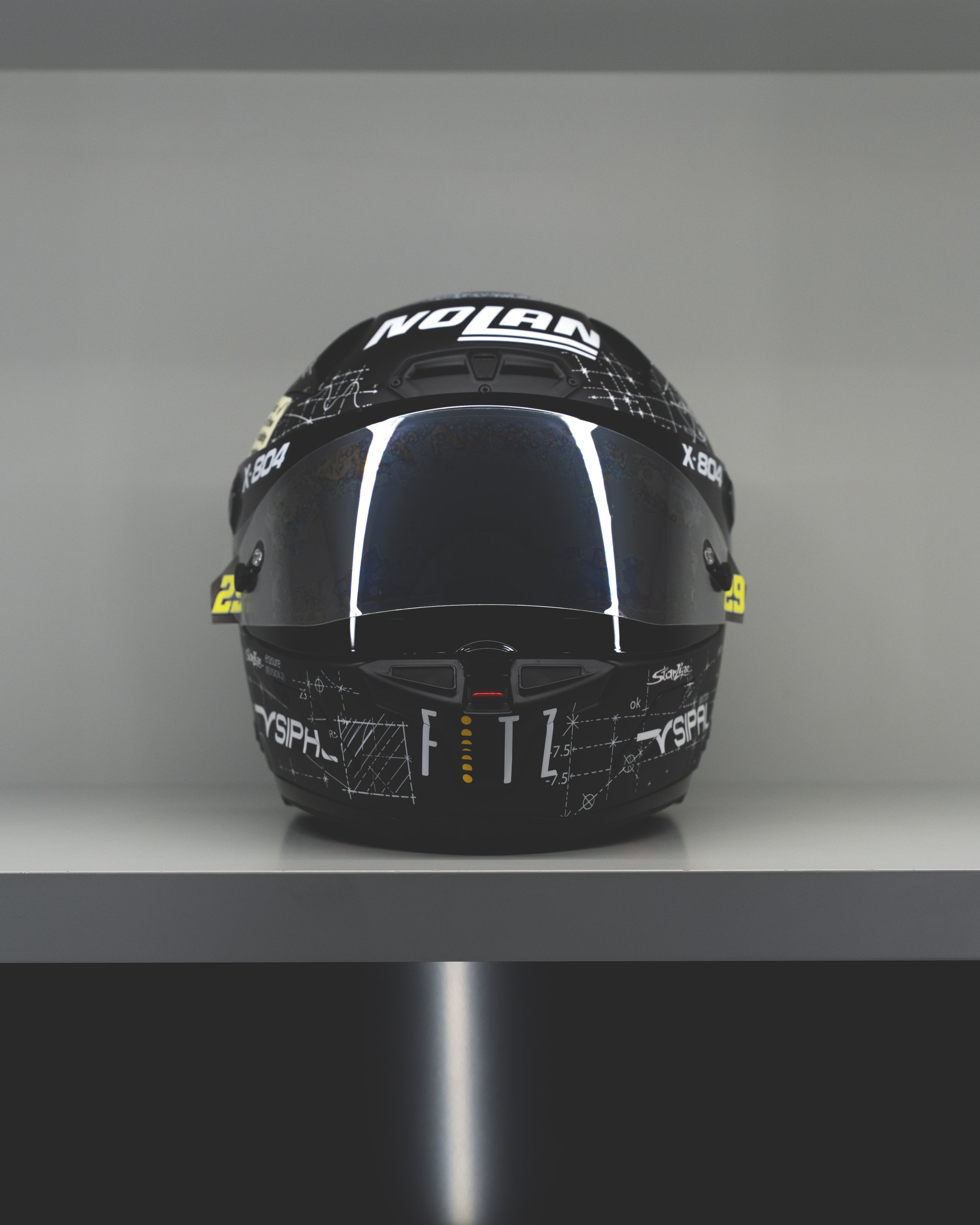
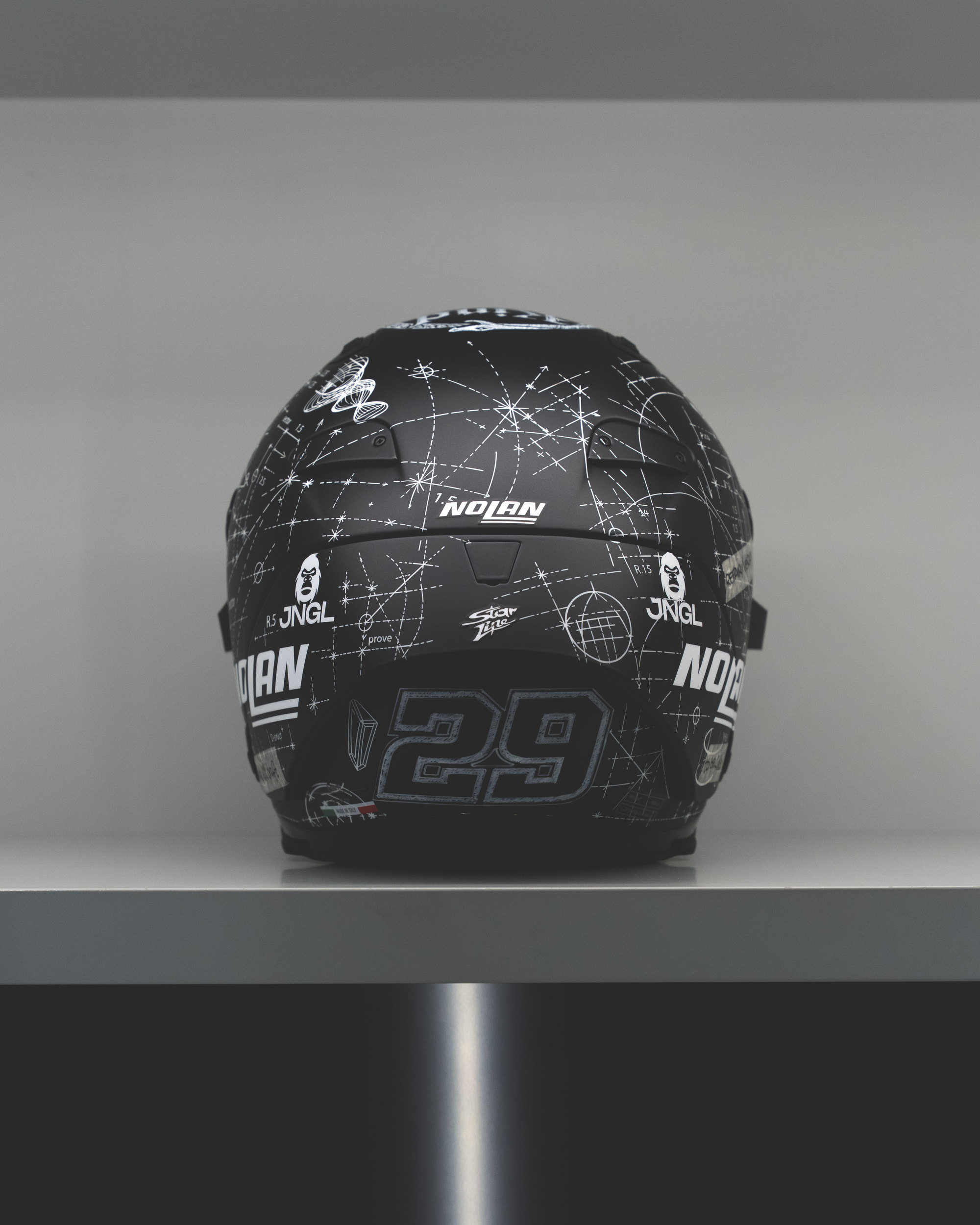
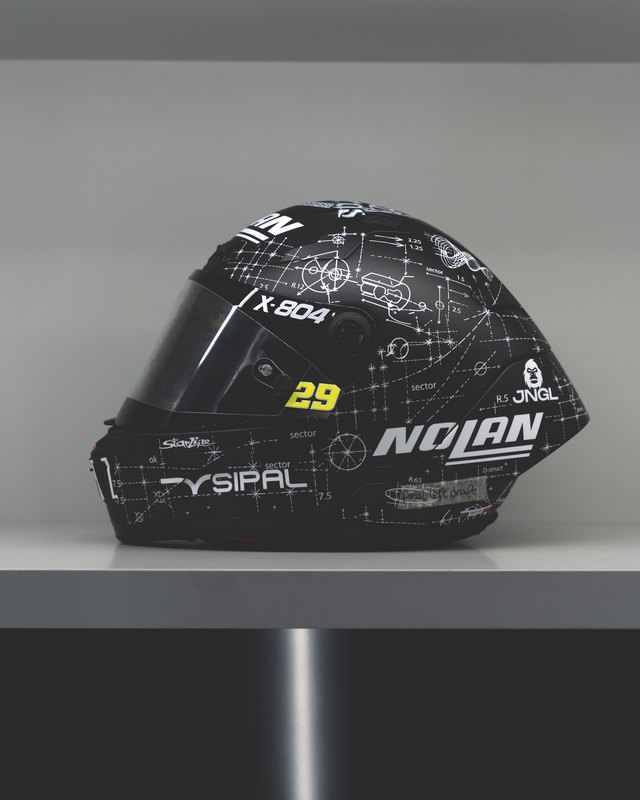
Sketches, construction lines and technical dimensions run across the helmet. Notes, erasures and pieces of adhesive tape remain beside them. The surface preserves an unfinished moment, as though the design had been taken from the workbench before completion.

A correction stays beside the mark that preceded it. What usually disappears from the finished object becomes the substance of the design. Walter Giordano and Andrea Iannone dedicate this chapter to the time needed to recognise a mistake, return to the work and find a new form.
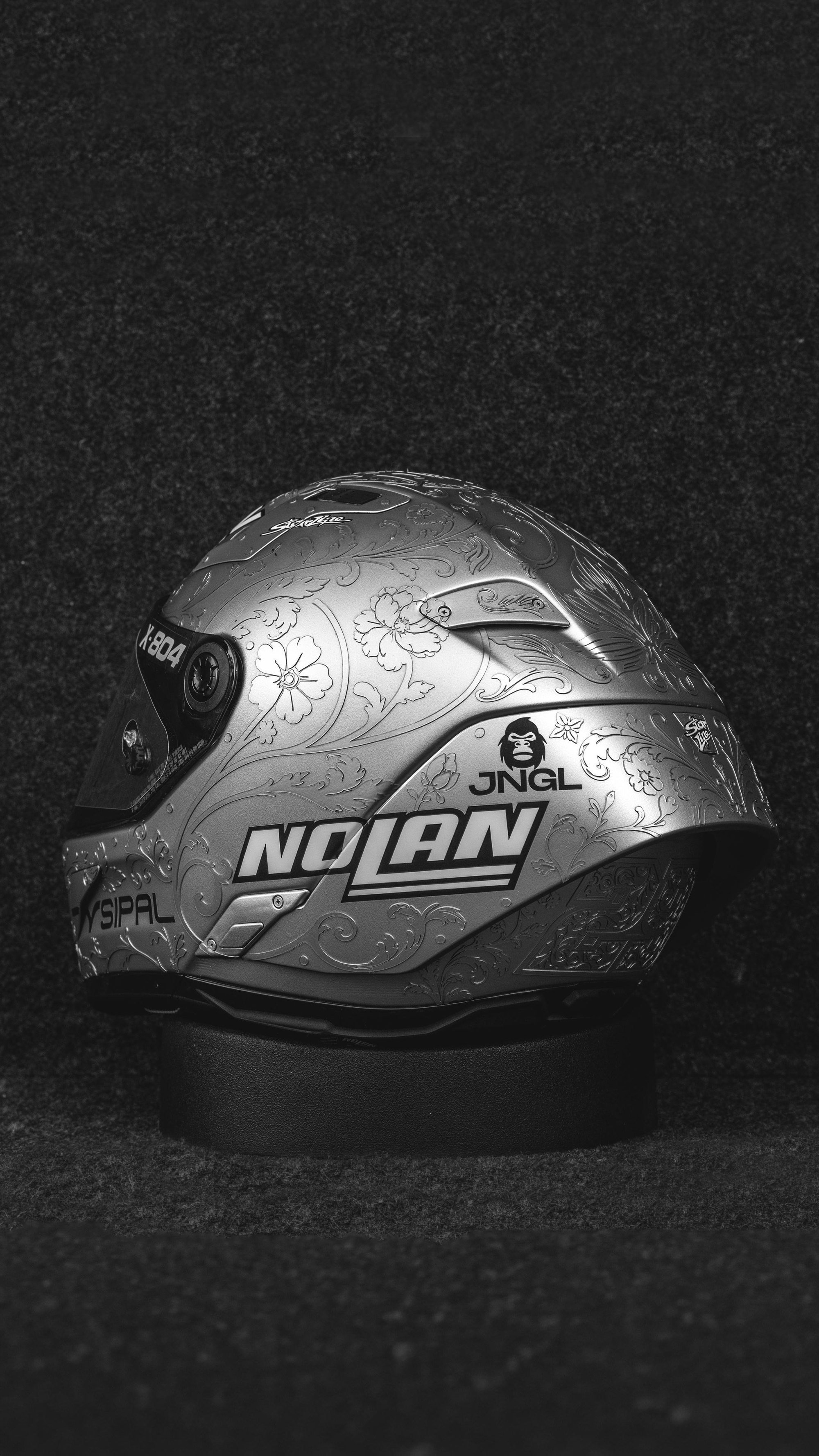
The Code.

The Code closes the series with craft and the chivalric code.

The chapter / 05

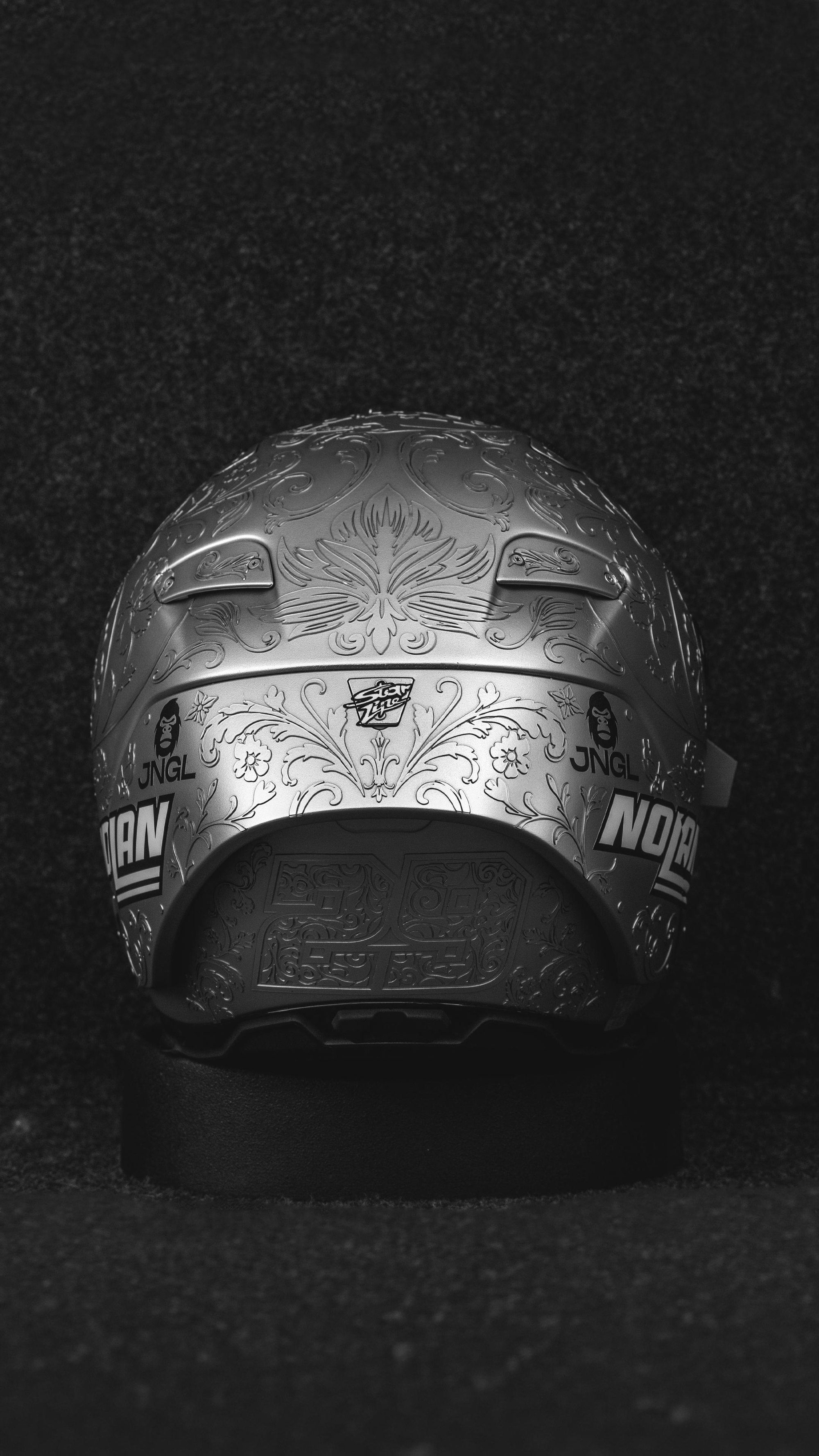
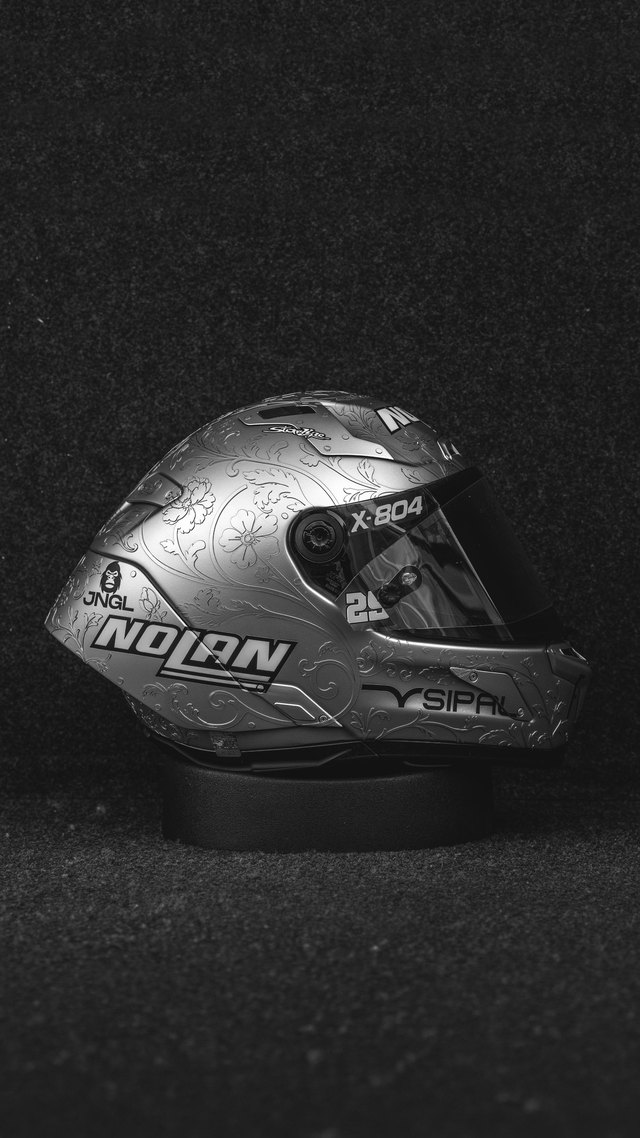
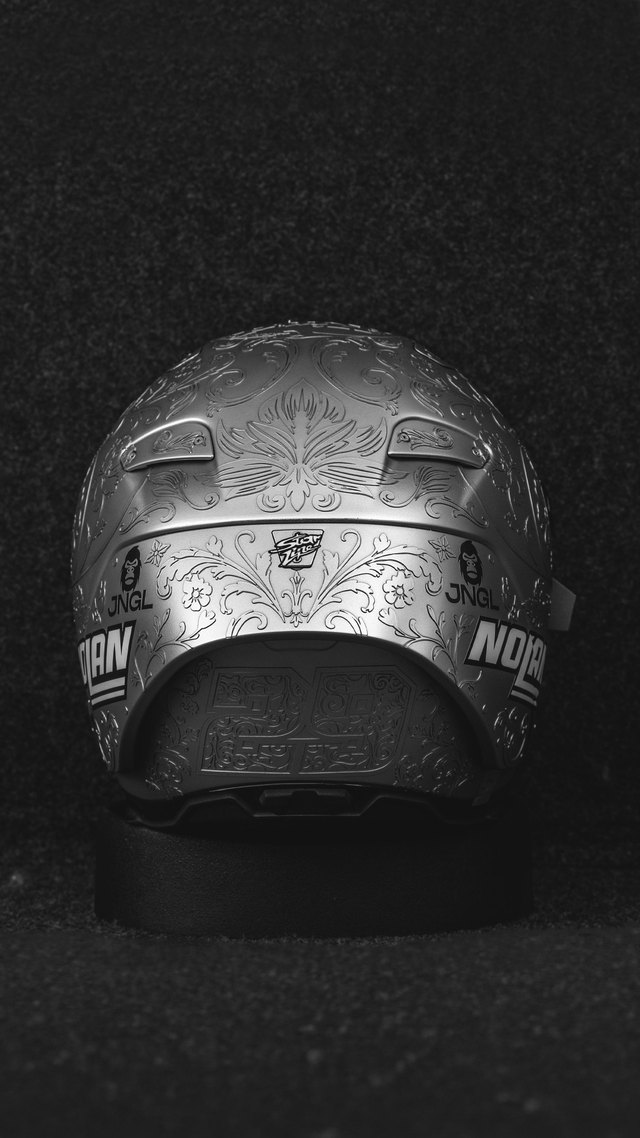
Floral motifs, incisions and reliefs follow the shell. The metallic finish suggests engraved and shaped material, giving the helmet the appearance of a contemporary knight’s helmet. Its references come from Italian workshops: wrought iron, carving, goldsmithing and stucco.

Knowledge passes through hands and through the people who teach it. It develops through repetition, mistakes and listening. The reference to chivalry connects that care with conduct: discipline, loyalty, restraint and respect. The final chapter joins how things are made with how we relate to others.

Creative direction and design: Walter Giordano, in collaboration with Andrea Iannone.

Continue through the archiveMotorcycles ↗
Closer look